When children witness an argument
In almost every family, there are tense moments. Fatigue, financial pressure, busy routines, work, parenting, and different opinions can lead to arguments between adults. The problem is not only the argument itself, but what children see, hear, and feel when it happens in front of them.
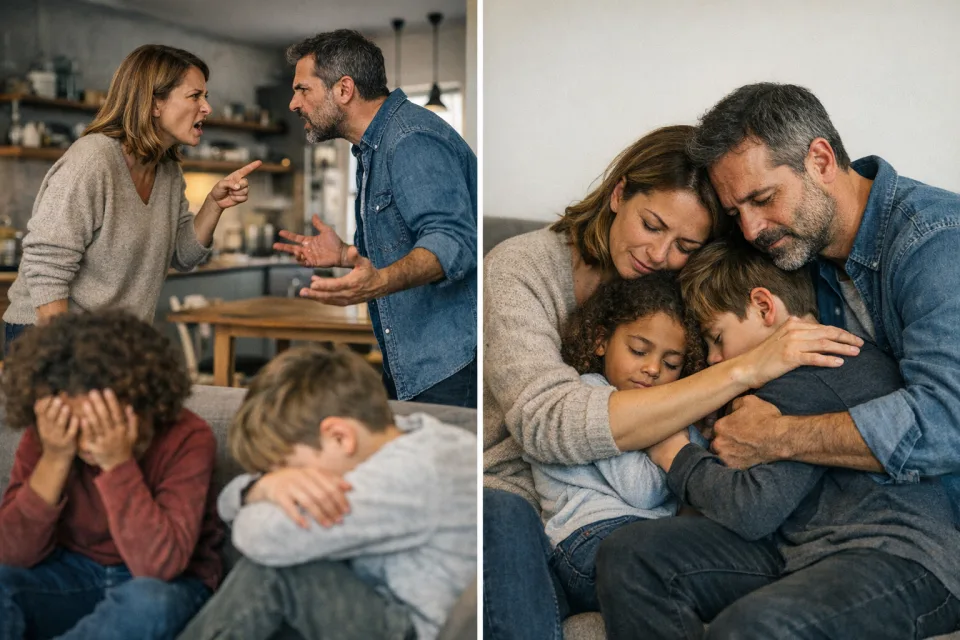
An occasional, brief argument without aggression does not necessarily cause trauma. However, frequent or intense arguments, with insults, threats, shouting, or hostile silence, can leave a real mark on a child’s emotional well-being. For children, parents or caregivers are a source of safety. When that sense of safety is shaken, they may feel fear, guilt, confusion, or responsibility for the conflict.
This article explains the impact of couple arguments in front of children and, above all, what to do afterwards to repair the situation and strengthen their sense of safety.
What impact can it have on children?
The effect depends on the child’s age, how intense the argument was, how often it happens, and how the adults resolve the conflict, or fail to. Even so, there are common reactions.
- Fear and insecurity: the child may worry that the parents no longer love each other, will separate, or will stop caring for them.
- Guilt: many children wrongly think the conflict happened because of them.
- Anxiety: they may become more tense, alert, or worried about small signs of irritation.
- Regression: some children start wetting the bed again, ask for more cuddles, sleep worse, or become more clingy.
- Behaviour problems: tantrums, irritability, aggression, or oppositional behaviour may appear.
- Sadness or withdrawal: some children become quieter, avoid talking or playing, and seem shut down.
In adolescence, the impact can look different. A teenager may pull away, criticise the parents, lose trust in the family’s stability, or take on the role of mediator, trying to solve problems that are not theirs to carry. This is especially hard when the young person feels they need to protect one parent.
What children learn by watching adults
Children learn much more from what they see than from what they are told. When they witness conflict, they also watch how it is handled. If they see respect, pauses, apologies, and reconciliation, they learn that disagreement is part of life. If they see attack, humiliation, or fear, they may internalise the idea that love means shouting, submitting, or staying silent.
That is why the impact depends not only on the fact that there was an argument, but on the emotional model the adults provide. Repairing afterwards is a powerful teaching moment. It shows that people can make mistakes, take responsibility, and reconnect with respect.
Signs the argument affected the child
Children do not always say directly how they felt. Often, they show it through their behaviour. It is worth paying attention if, after conflict between adults, a child or teenager:
- becomes quieter or more irritable
- sleeps worse or has nightmares
- seeks more physical or verbal closeness
- repeatedly asks for reassurance that “everything is okay”
- tries to control the atmosphere at home
- has unexplained physical complaints, such as stomach aches or headaches
- struggles to concentrate at school
- copies the aggression or uses harsh language with siblings and classmates
In some cases, the child shows nothing right away. That does not mean they were unaffected. Some children store up tension and show it later.
How to repair after an argument
Repairing does not mean pretending nothing happened. It also does not mean asking the child to pick a side. Repair means recognising what happened, reducing insecurity, and showing that the adults are still in charge of the relationship and the parenting.
1. Calm down first
If the argument is still heated, the most important thing is to stop the escalation. If possible, lower your voice, move the conversation away from the children, and take a break. A repair attempt made at the peak of anger is rarely effective.
If needed, say something simple like: “We need to calm down now. We’ll talk later.” This already helps children understand that the conflict is not out of control.
2. Give a short, age-appropriate explanation
Children do not need the details of the conflict or to know who “won”. They need a brief and reassuring explanation. For example:
“Adults sometimes disagree and speak less calmly. This is not your fault. We are sorting it out, and you are safe.”
Avoid phrases like “Your dad/mum is always like this” or “Maybe you’re right, he/she overreacted.” That puts the child in the middle of the conflict.
3. Take responsibility
If an adult shouted, insulted, or lost control, it is important to say so clearly. A sincere apology teaches far more than a defensive explanation.
Example: “I raised my voice and that was not okay. I’m sorry you had to hear that. I’ll try to do better.”
The goal is not to humiliate yourself, but to show emotional maturity and respect for the child.
4. Reaffirm safety and love
After an argument, many children need to hear that they are still loved and protected. The message should be simple, repeated if needed, and matched by the adults’ behaviour in the days that follow.
“It is not your fault.”
“We are still your parents.”
“We will deal with this between adults.”
“We are here for you.”
5. Return to routine
Routines help children regain a sense of normality. Meals, bedtime, school, baths, play, and time to talk with parents can all act as anchors. There is no need to force cheerfulness; the goal is to bring back predictability.
6. Show visible repair
Children feel safer when they see concrete signs of reconciliation or healthy conflict management. This does not require dramatic displays. It is enough for them to notice that the adults are speaking respectfully again, cooperating, and keeping up responsibilities.
If there was a misunderstanding between the couple, a calm later conversation can include an agreement: “Next time, let’s take a break before continuing.”
What does not help
Some adult reactions increase children’s discomfort, even when the intention is to protect them.
- Denying what happened: the child can feel the tension and becomes confused if the adults act as if nothing took place.
- Making the child choose sides: this creates divided loyalties and significant emotional distress.
- Using the child as a messenger: asking them to pass messages or confirm information adds emotional pressure.
- Minimising feelings: phrases like “it was nothing” can make the child feel they cannot talk about what they felt.
- Repeated intense arguments: repair loses its power if the pattern continues.
What if the arguments are frequent?
When conflict happens often, it is no longer just an isolated episode. The child lives on alert, and that can affect sleep, mood, learning, and relationships. In these cases, it is worth looking at the situation honestly and seeking support.
It may help to:
- set rules for discussing without shouting or insults
- choose times without children for difficult conversations
- agree on breaks when tension rises
- divide chores and responsibilities to reduce strain
- seek couple therapy or family support, when possible
If there is serious verbal violence, threats, control, fear, pushing, or physical aggression, safety must come first. In those cases, it is important to seek specialist help and protect children from the conflict. The family’s emotional impact and safety should be dealt with urgently.
How to talk to children of different ages
Up to age 5
Young children understand very little of the argument, but they feel the tension strongly. They need short phrases, a calm tone, and physical closeness if they accept it. Reassure them that they are safe and that the adults will sort things out.
School age
At this stage, children may ask more direct questions. Explain without drama and without too many details. It can help to say that the adults disagreed, that it was not the child’s fault, and that there is a way to resolve it.
Teenagers
Teenagers usually understand more. Even so, they should not be placed in the role of main confidant or mediator. You can acknowledge the impact without burdening them: “We know you heard the argument. We’re sorry about that. We’ll deal with it between adults.”
When to seek help
It is worth seeking professional support if:
- the arguments are constant or very intense
- there is fear in the home
- the children show lasting changes in sleep, behaviour, or school performance
- one of the adults feels they frequently lose control
- there are episodes of verbal, psychological, or physical violence
- the couple is planning to separate and needs support during the transition
A psychologist, family therapist, or another mental health professional can help organise communication, protect the children, and reduce the impact of conflict.
An important message for parents
No couple argues well all the time. What really makes a difference is how repair happens afterwards. For children, seeing an adult admit a mistake, calm down, and reconnect can be deeply protective. You do not need to be a perfect couple. You need to be a sufficiently safe, responsible, and available adult who can repair.
When a child sees that conflict does not destroy the bond or the sense of safety, they learn something valuable: relationships can go through difficult moments and still keep respect, care, and love.
Helpful reading and resources
If you want to explore child emotional well-being and the protection of children in difficult family situations further, you can consult institutional and support resources in Portugal.