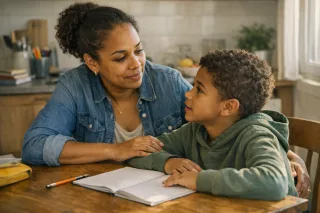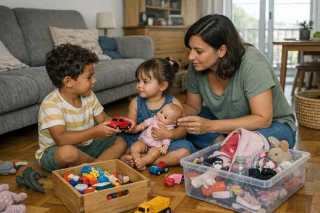

Some children seem to naturally pick up on how others feel. Others need more time, more examples, and more repetition. In both cases, empathy does not happen by chance: it develops. And it develops mainly at home, in the small moments of everyday life, long before any “serious” talk about values.
Raising a child to be empathetic does not mean raising someone who never gets upset, always gives in, or puts others above themselves. It means helping them recognize emotions, understand that other people have their own limits, preferences, and pain, and act with respect. It is an emotional and social skill that affects friendships, family life, learning, and even the way a child handles conflict throughout life.
What empathy means in practice
Empathy is the ability to sense what another person may be feeling and respond with consideration. It is not just “feeling sorry for someone.” Nor is it agreeing with everything. An empathetic child gradually becomes able to step outside their own point of view and think: “How did this affect the other person?”
This learning starts early. A baby does not yet understand another person’s emotions, but reacts to tone of voice, facial expression, and the caregiver’s calm or tension. Later, a child begins to name feelings, notice unfairness, and understand that someone can be sad even if they do not say it directly.
Why teaching empathy matters so much
Empathy helps build healthier relationships. Children who develop this skill tend to find it easier to cooperate, solve conflicts, respect differences, and repair mistakes. They also usually cope better with frustration because they learn that their own wishes are not the only measure of reality.
At school, empathy supports group work, inclusion, and a better classroom climate. At home, it helps with siblings, shared rules, and those moments when an adult needs to say “no” without turning it into a constant battle. In adolescence, it becomes even more important, because young people face more intense relationships, more social pressure, and more exposure to conflict both online and in person.
Children learn more from example than from speeches
A child learns about empathy by watching how adults treat different people, how they talk about those who make mistakes, and how they react when someone is struggling. If a parent asks for respect but shouts, humiliates, or mocks others, the message becomes confusing. If a mother or father speaks gently, apologizes when they get it wrong, and shows genuine curiosity about what another person feels, the child absorbs that as relational language.
Being an empathetic role model does not require perfection. It requires enough consistency to show that respect is not weakness. For example:
- “I can see you’re angry. But you may not hit.”
- “Your sister is crying. Let’s find out what happened.”
- “I was unfair in the way I spoke. I’m going to correct myself.”
- “You didn’t like the decision, but I listened to you and kept the boundary.”
Helping a child name emotions helps them recognize others
A child cannot easily be empathetic if they do not have emotional language. That is why it helps to support them in identifying what they feel and what others may feel. Instead of only asking “Were you naughty?”, try more useful questions: “How do you think he felt when you took the toy?” or “How would you feel if you were in her place?”
With younger children, use simple, concrete language. With older children, go deeper using everyday examples, stories, films, or sibling conflict. The goal is not to interrogate them, but to encourage reflection.
How to teach empathy in everyday life
Empathy is built through simple routines. Some practical ideas:
1. Validate before correcting
When a child is upset, first help them feel understood. Then correct the behavior. Validation does not mean agreeing; it means recognizing the emotion. Phrases like “I can see you were frustrated” or “You’re really upset because you wanted to keep playing” help reduce tension and open the door to learning.
2. Talk about the impact of actions
Instead of focusing only on the rule, talk about the effect on the other person: “When you shout, your brother gets scared” or “When you shared your snack, your classmate felt included.” This helps the child connect behavior with human consequences, not just punishment.
3. Give opportunities to repair
If a child has hurt someone, encourage a repair gesture that fits their age: saying sorry, helping tidy up, offering water, redoing a drawing, writing a note, or simply asking “What can I do to help?” Repair teaches responsibility without humiliation.
4. Show care for real people
Empathy becomes more concrete when children see care in action. Visiting a sick grandparent, helping an older neighbor, donating clothes, making a meal for someone who is tired, or asking a friend how their day went are experiences that make the value visible.
5. Read stories and talk about characters
Books, films, and stories are great ways to explore different perspectives. Ask: “Why do you think she did that?”, “How do you think he felt?”, “Was there another way?” A story becomes a safe way to practice emotional reading.
6. Respect differences at home
Empathy also means accepting that siblings are not the same, that one needs more time, another more quiet, another clearer rules. When a family treats differences with respect, children learn that not everyone needs to fit into the same mold.
Boundaries also teach empathy
It may seem contradictory, but firm boundaries help children consider others. A child who learns that they may not hit, insult, invade, or humiliate others is learning that other people have dignity and boundaries. Excessive permissiveness often does not create freedom: it creates children with little awareness of the impact they have.
At the same time, boundaries without warmth do not teach empathy either. The ideal is to combine firmness and respect. For example:
- “I can’t let you speak like that.”
- “You’re allowed to be upset; aggression is not allowed.”
- “Let’s solve this without hurting anyone.”
What to do when a child seems not very empathetic
Many parents worry when their child seems “selfish,” indifferent, or not remorseful. Before concluding that there is a character problem, it helps to look at age, tiredness, anxiety, impulsivity, and context. Young children are very focused on their own needs. That is expected. Empathy develops gradually.
If a child has difficulty reading social cues, reacts very impulsively, often hurts others, or seems not to learn from consequences, it may be helpful to talk to a pediatrician, the school, or a child psychologist. Some developmental, attention, language, or self-regulation difficulties can affect the way a child relates to others.
Empathy is not submission or being “too nice”
It is important to teach that understanding others does not mean erasing yourself. An empathetic child also learns to say “no,” protect themselves, ask for help, and recognize unfair situations. This distinction is essential, especially in friendships, teenage relationships, and pressure from peers.
An empathetic child is not one who accepts everything. It is one who can respect others without losing respect for themselves.
Empathy, faith, and family values
In many families, empathy is also lived as a moral, spiritual, or religious value. Whatever each home’s tradition, the idea of caring for others, acting with compassion, and treating other people with dignity can be a very strong educational foundation. When a family turns these values into concrete actions, children understand that they are not just nice words, but a way of living.
If your family values faith, it can be helpful to connect that sense of care to simple questions: “How can we serve?”, “Who needs help today?”, “How can we be more fair at home?” The most important thing is that the message is lived with calm, not with guilt or fear.
Common mistakes that make empathy harder to develop
Some habits make it harder to teach empathy:
- Making fun of emotions: “That’s nothing.”
- Comparing siblings: “Your brother never did that.”
- Demanding automatic apologies without reflection.
- Solving everything through threats or shame.
- Giving the opposite example to what you ask for.
- Confusing empathy with blind obedience.
Correcting these patterns is not about starting a revolution. It is about changing tone, listening, and the way you guide your child.
When to seek help
If relationship difficulties are persistent, or if there is frequent aggression, isolation, repeated cruelty, an absence of response to other people’s suffering, or signs of emotional distress, it is worth seeking professional support. In some cases, difficulties with empathy are linked to family stress, bullying, language problems, neurodevelopmental conditions, or other situations that benefit from assessment.
The goal is not to label the child, but to understand them better so they can grow with more emotional and social security.
In summary
Teaching empathy means helping a child see the world beyond their own immediate wishes. It is done through example, emotional language, consistent boundaries, repairing mistakes, and real opportunities to care for others. It is not a one-day lesson; it is a family culture repeated in small gestures.
When a child learns that other people also feel, also need, and also deserve respect, they gain much more than good manners. They gain the foundation for healthy relationships, responsibility, and humanity.