
What is puberty in girls?
Puberty is the stage when the body begins to change in preparation for adult life. In girls, these changes usually start between ages 8 and 13, although there can be normal variation from child to child. Every body has its own pace.
For many families, puberty brings joy and pride, but also some worry. It is a time of physical growth, but also emotional change. A girl may start to feel different, more sensitive, more private, or more aware of her appearance. That is why, alongside the physical signs, it is important to pay attention to emotional well-being too.
What are the most common signs?
The first signs of puberty in girls usually appear gradually. They do not always happen in the same order, and that is normal.
- Breast development: often one of the first signs.
- Height growth: there may be a faster growth spurt over a few months.
- Hair in the pubic area and under the arms: this is a normal change.
- More sweating and stronger body odour: daily hygiene may need a little extra attention.
- Skin changes: some girls start to have oilier skin, spots, or acne.
- Clear or whitish vaginal discharge: this may appear before the first period and is generally normal.
- First period: this usually happens some time after breast development begins.
Mood changes, a greater need for privacy, and some insecurity about the body may also appear. This does not mean there is a problem. Often, it is simply the adjustment to a new stage.
When does the first period usually happen?
The first period, called menarche, usually comes a few years after breast development begins. On average, it appears around ages 12 to 13, but it may happen earlier or later.
In the beginning, it is common for the cycle to be irregular. Periods may be skipped, come at different times, or vary in amount. This is very common at the start and, by itself, is usually not concerning.
It is helpful to prepare a girl for this moment before it happens. Knowing what to expect can reduce fear and embarrassment, especially if the period starts at school or away from home.
How can you talk about puberty without embarrassment?
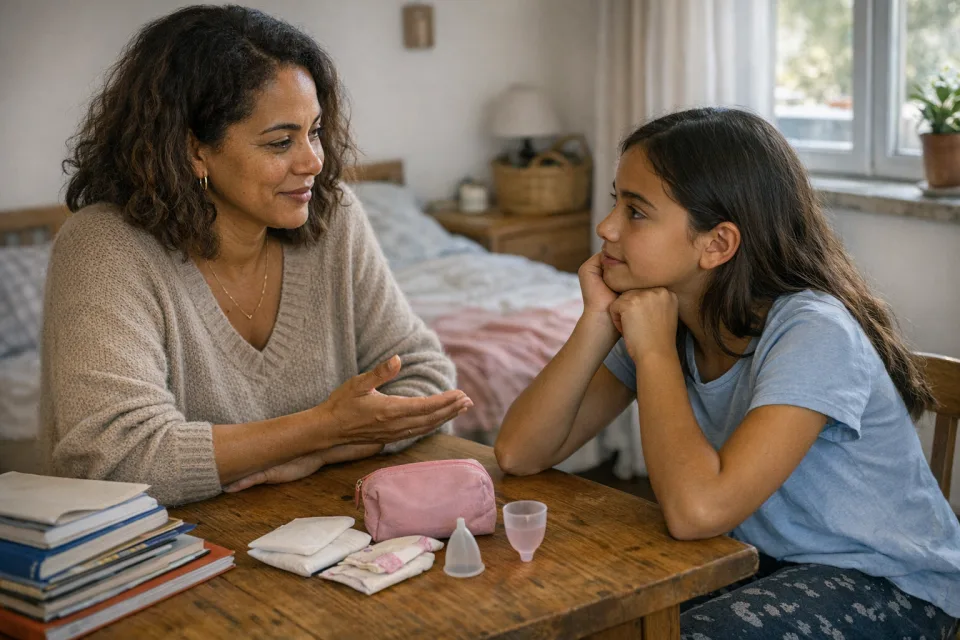
Talking about puberty naturally helps a girl feel safe and informed. The goal is not to have one single “perfect” conversation, but to create an environment where she knows she can ask anything.
Some useful ideas:
- Start early, before the first period begins.
- Use simple, correct words to name body parts.
- Answer questions calmly, without laughing or making a big drama out of them.
- Say that all girls go through different changes, but all deserve respect.
- Explain that feeling embarrassed sometimes happens, but there is no reason to be afraid.
If a child asks a difficult question, you do not need to know everything right away. You can say: “That’s a good question, let me think about it with you” or “Let’s check that together.” What matters most is keeping the conversation open.
What should be explained before the first period?
Some practical information makes a big difference:
- What menstruation is and why it happens.
- How to use sanitary pads or another age-appropriate menstrual product.
- How to carry a pad discreetly in a school bag.
- What to do if a period starts at school.
- That there may be mild cramps and tiredness.
- That hygiene should be regular, but not excessive.
It can also help to explain that menstruation does not make a girl dirty or reduce her worth. It is a normal body function. This message helps build a healthier relationship with the body and reduces shame.
How can you support her day to day?
Support during puberty is not only physical. It includes observation, listening, and being present. A girl going through puberty may need more privacy, but she still needs support.
Simple ways to help include:
- Respecting her space, without unnecessary intrusion.
- Noticing whether she seems more tired, irritable, or sad.
- Making sure she gets enough sleep, balanced meals, and physical activity.
- Keeping routines stable, even when moods shift.
- Talking about body hygiene, clean underwear, and habit changes when needed.
It is important to balance independence with calm supervision. The message should be: “I trust you and I’m here to help.”
How do you handle embarrassment, insecurity, and comparisons?
Many girls compare their bodies with classmates, sisters, or the images they see on social media. Some become insecure because puberty starts earlier or later than it does for their friends.
In these situations, it helps to say that every body has its own timing. There is no perfect schedule. Some girls develop early, others later. Some get their periods soon after breast development starts, while others take longer.
It is also important to reinforce that a girl’s value does not depend on body size, appearance, weight, or when her period started. Self-esteem at this stage needs respect, listening, and positive examples.
When does puberty need medical evaluation?
In most cases, puberty happens normally. However, it is important to speak with a paediatrician, family doctor, or other health professional in some situations.
- If puberty signs begin before age 8.
- If there are no signs of puberty by age 13.
- If there is severe pain, very heavy bleeding, or prolonged periods.
- If there are sudden mood changes, persistent sadness, or marked anxiety.
- If the girl has difficulty coping with body changes.
- If there are questions about growth, nutrition, or overall development.
It is also worth asking for guidance if the child seems very distressed about menstruation or body development. Getting support early can prevent unnecessary suffering.
What role do school and other caregivers have?
Puberty is not only a home issue. School can play a very important role, especially when the first period happens away from parents. Teachers, assistants, and other caregivers should know, discreetly, how to support the student if needed.
A girl should feel that she can ask for help to go to the bathroom, change a pad, or rest for a moment if she has cramps. When school responds respectfully, the experience becomes less stressful.
If the child lives with grandparents, uncles, aunts, or other caregivers, everyone should use the same language. Clear and consistent messages provide security.
How can you prepare a kit for school or outings?
A small kit can make a big difference. It might include:
- 1 or 2 sanitary pads.
- Extra underwear.
- A small bag for dirty clothes.
- Tissues.
- A short note or instruction sheet, if the girl is still unsure.
This kind of preparation reduces the fear of “something unexpected” happening. It also helps the girl feel more in control of the situation.
Is there anything special to consider about food and rest?
During puberty, the body grows and needs energy. A varied diet with fruit, vegetables, protein, quality carbohydrates, and enough water supports healthy development. There is no need for diets or food restrictions without professional guidance.
Sleep is also essential. Tiredness can worsen irritability, concentration problems, and even the way menstrual pain is felt. Regular sleep routines and reducing screen time before bed can make a difference.
Physical activity, when suited to the girl’s age and preferences, can also support mood, posture, and confidence.
When puberty affects emotions
Puberty is a time of major internal change. A girl may become more sensitive, want more independence, argue more, or withdraw from the family. This does not mean she is being rude or ungrateful. Often, it is part of identity formation.
The best response is usually a mix of firmness and empathy. Clear boundaries are still important, but without humiliating or mocking her. Phrases like “I understand you’re upset” or “Let’s talk when we’re both calmer” help protect the relationship.
If there are ongoing signs of emotional distress, isolation, or a strong change in behaviour, psychological support may be helpful.
What should parents and caregivers remember?
Puberty in girls is a sign of growth, not a problem to fix. Adults’ role is to inform, support, and protect. An open conversation, repeated over time, is more valuable than one long explanation.
If a girl feels she can speak without fear, ask for help without shame, and live this stage with dignity, she will be better prepared for the challenges of adolescence. Small acts of support today can make a big difference in how she sees herself tomorrow.
Conclusion
Recognising the signs of puberty in girls, talking about it naturally, and offering attentive support are essential steps toward a calmer experience. It is not only about explaining body changes, but also about offering safety, respect, and presence during a sensitive stage of life.
Every girl has her own pace. What matters most is that she feels listened to, informed, and supported.


