
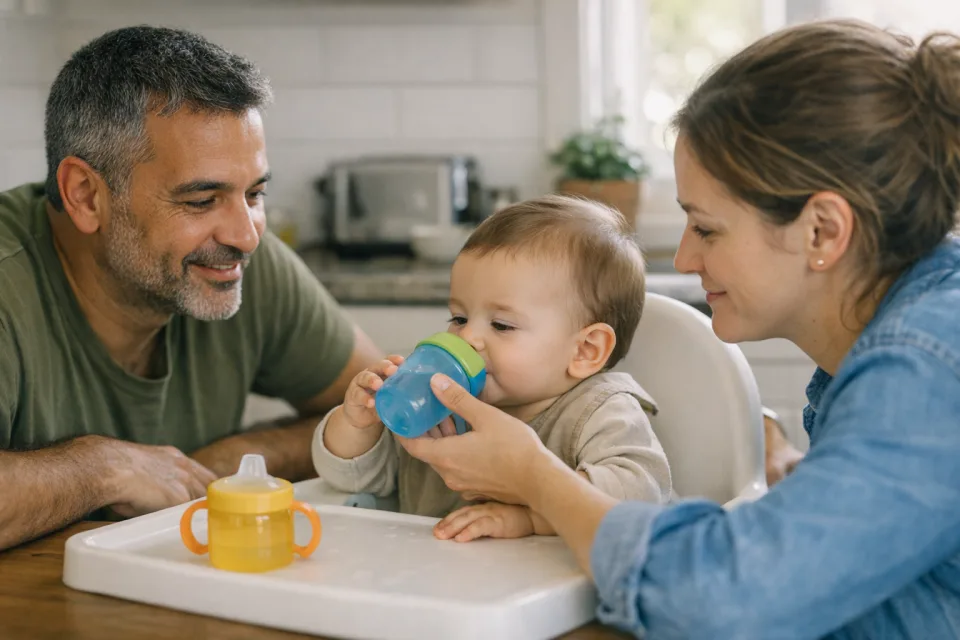
When to Give Water to a Baby?
One of the most common questions in the first few months is when to give water to a baby. The answer depends mainly on age and feeding type. In general, a healthy baby who is well fed with breast milk or formula does not need water in the first few months. Milk already provides the hydration they need.
Water is usually introduced gradually when complementary feeding begins, typically around 6 months. Even then, the amount should be small at first and adapted to the baby’s appetite, the weather, and meals.
This topic deserves attention because, in very young babies, drinking too much water can be dangerous. So it is best to follow simple, safe guidance, without rushing and without replacing milk with water.
Before 6 Months: In Most Cases, Water Is Not Needed
During the first months of life, a baby should feed only on breast milk or infant formula, unless a doctor advises otherwise in very specific situations. Milk contains enough water to keep the baby hydrated, even on hot days.
Giving water before 6 months can bring some risks:
- the baby may drink less milk, reducing nutrient intake;
- there may be a higher risk of salt imbalance in the body, especially if water replaces feeds;
- a baby’s stomach is small, and water takes up space that should be used for milk.
If the baby seems thirsty, the safest option is to offer another breastfeed or bottle, not water.
From What Age Can a Baby Drink Water?
In general, water can be introduced from 6 months onward, when the baby starts eating solid foods or purées. At this stage, water is no longer a daily necessity in large amounts, but it becomes useful alongside meals and to help the baby get used to using a cup.
The goal is not to fill the baby with water, but to offer small amounts throughout the day, especially:
- with meals;
- on warmer days;
- if the baby has a cold, fever, or is eating drier foods;
- when the baby drinks less milk because they are eating more solids.
If you are unsure about your baby’s specific situation, a paediatrician or child health nurse can give tailored advice.
How Much Water Should You Give a Baby?
There is no single amount that fits every baby, because it depends on age, weight, diet, and the environment. Still, there are some useful practical rules.
Between 6 and 12 Months
At this stage, water should be offered in small amounts, mainly with meals. Often, a few sips are enough. In practical terms, you can start with just a few millilitres over the day and increase gradually as the baby accepts it, without forcing.
For most babies at this age, water is complementary; it does not replace milk. Milk remains the main source of hydration and nutrition.
After 1 Year
From the first birthday, the baby gradually becomes a toddler and water plays a bigger role in daily life. At this stage, they can drink water more regularly throughout the day, especially between meals and on hot days.
Even so, milk and other foods still contribute to total hydration. The most important thing is to build the habit of drinking water regularly, without overdoing it.
How to Offer Water to a Baby
Offering water does not mean making the baby drink. The best approach is to keep it simple and calm.
- Use a small cup, preferably one suited to the baby’s age.
- Offer water with meals, little by little.
- Start with small amounts so the baby gets used to the taste and the movement.
- Do not use water to replace feeds unless the paediatrician says so.
- Avoid adding sugar, juice, or tea to water.
Many babies learn better when they see adults drinking water too. Family example helps a lot in building good habits.
What Water Should You Choose?
For babies and young children, water should be safe and suitable for drinking. In Portugal, tap water is generally safe to drink, but some families prefer bottled water out of habit or on medical advice. What matters is that the water is fit for drinking.
If you are unsure about the quality of tap water in your home, you can check with the local water utility or look up public water quality results.
If the baby is very young or if the paediatrician has given specific advice, there may be extra precautions, for example when preparing infant formula. In those cases, always follow the instructions you were given.
Important Safety Tips
Giving water to a baby is healthy when it is done at the right time and in the right amount. The main precautions are these:
- Do not offer water before 6 months, unless there is medical advice to do so.
- Do not replace milk with water, especially in the first year.
- Do not give too much, because excess can be harmful.
- Do not sweeten the water or mix it with juice.
- Use a clean cup and keep good hygiene practices.
Another important point is that a baby may refuse water at first. That is normal. The taste, texture, and even the way the liquid comes out of the cup are all new.
How to Tell If Your Baby Is Well Hydrated
A well-hydrated baby usually shows some simple signs:
- wet nappies regularly;
- a moist mouth;
- generally well and active for their age;
- usual feeding without signs of dehydration.
If the baby has vomiting, diarrhoea, high fever, very hot weather exposure, or is refusing feeds, the situation changes. In those cases, medical assessment is important because fluid needs may increase and the hydration plan may be different.
When to Seek Medical Advice
You should speak to a healthcare professional if:
- the baby is refusing milk and seems less hungry since starting to drink water;
- there are signs of dehydration, such as fewer wet nappies, unusual sleepiness, or a dry mouth;
- the baby has diarrhoea, vomiting, or fever;
- there are questions about preparing formula.
If the concern feels urgent, seek medical help the same day.
Water, Feeding, and Routine: Balance Matters Most
In practice, the best advice is simple: in the first 6 months, a baby usually does not need water; after that, water is introduced little by little as a complement to feeding, not as a replacement for milk.
More than measuring every sip, it is important to watch your baby, respect hunger and fullness cues, and keep a calm, consistent routine. Introducing water is part of growth and learning, just like sitting, chewing, and using a cup.
With common sense and paediatric guidance when needed, this step becomes safe and natural.
Frequently Asked Questions
Can I give water to my baby in summer?
Before 6 months, usually not. Milk is still enough, even in warm weather. After 6 months, you can offer small amounts, especially with meals and on very hot days.
My baby seems thirsty. Can I give water?
In the first few months, it is better to offer milk. If complementary feeding has already started, you can give a few sips of water.
Does water help with hiccups or a cold?
Not always. In very young babies, water should not be used as an automatic solution. If there is a cold, fever, or discomfort, ask the paediatrician for advice.
Can a baby drink too much water?
Yes, and that is not desirable. Too much water can be harmful, especially in the first months. The best approach is always small amounts appropriate for the baby’s age.
Conclusion
Knowing when to give water to a baby helps avoid common mistakes and protects health in the first months and years of life. The general rule is simple: before 6 months, a baby usually does not need water; from complementary feeding onward, water can be offered in small amounts; after the first year, it becomes part of the daily routine more naturally.
Every baby is different, so it is always worth adjusting guidance to their age, feeding type, and the advice of the healthcare professional who follows them.
Note: This article is for information only and does not replace medical assessment. If you have questions about hydration, feeding, or illness, speak to your paediatrician or health centre.