My Child Doesn’t Like Sports: How to Encourage Without Pushing
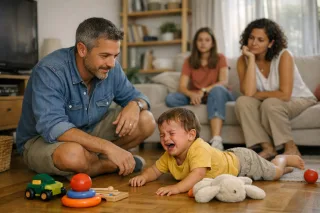
Not every child gets excited about football, swimming, dance, or other sports activities. Some get tired quickly, feel shy, dislike competition, or simply prefer to play in different ways. This can worry parents, especially when there is a belief that “every child needs to do sport”.
The truth is that movement matters for physical and emotional health, but it does not always need to happen in a club, through an organised sport, or with performance goals. The most important thing is to help your child find ways to move that make sense for them, without excessive pressure and without comparing them to siblings, classmates, or other children.
This article explains why some children don’t like sports, how to encourage them with empathy, and what to do when the resistance is strong. In many cases, the key is to lower the pressure and increase curiosity.
Why a child may not like sports
Before insisting, it helps to understand the reason. It is not always about laziness, lack of interest, or “not being used to it”. There may be several reasons behind the refusal.
- Fear of failing: the child feels they will be laughed at, lose, or be “bad at sport”.
- Shyness about their body or being watched: changing clothes, exercising in front of others, or being observed may feel uncomfortable.
- Negative experiences: criticism from a coach, competitive peers, or a class that feels too demanding can create rejection.
- A calmer temperament: some children prefer quiet, creative activities or reading, and that does not mean there is a problem.
- Motor or sensory difficulties: coordination, balance, hand-eye coordination, or sensitivity to noise and touch can make sport harder.
- Social anxiety: the group, competition, or being judged can create tension.
- Tiredness or overloaded routines: a very busy schedule can make any extra activity feel like another obligation.
It is also possible that the child actually enjoys moving, but does not like “sport” in the traditional format. There is a difference between not liking running, kicking a ball, or competing, and not liking movement in general.
What parents can do without forcing
The goal is not to make your child “like sports”, but to help them discover forms of movement that are safe, enjoyable, and sustainable. When there is too much pressure, physical activity can become associated with conflict, shame, or failure.
1. Start by listening
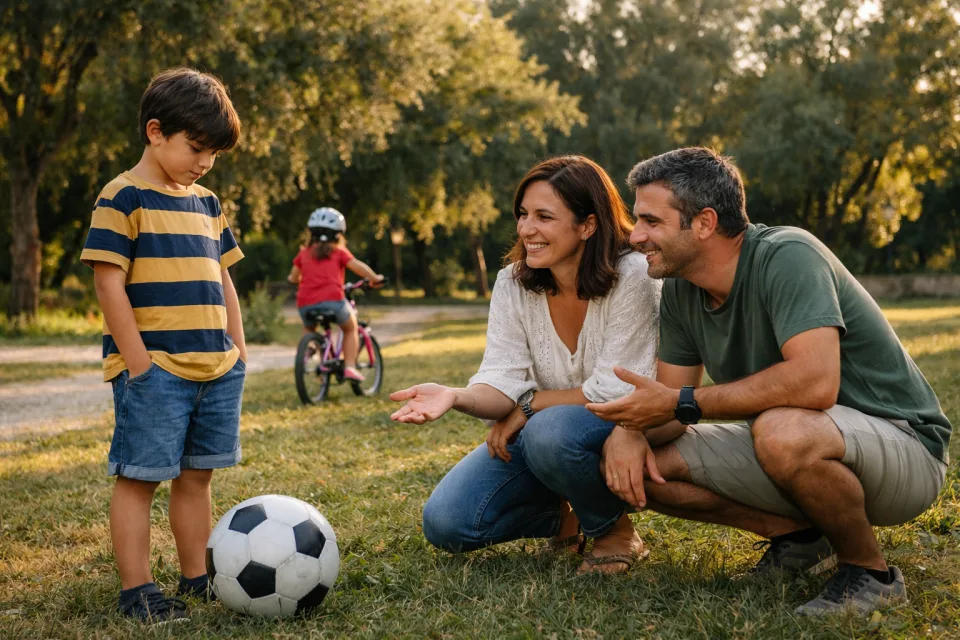
Instead of jumping straight to solutions, try to understand what your child feels. Simple questions help:
- What don’t you like about it?
- Is it the effort, the rules, the other children, or the coach?
- Is there anything that makes you feel nervous?
Listening without correcting immediately makes it more likely that your child will speak honestly. Even if the reason seems small to an adult, it may feel very important to them.
2. Avoid labels and comparisons
Phrases like “your brother loves sports” or “you need to be more active” usually create resistance. The child may feel they are failing or that the way they are is not accepted.
Instead, it is better to say: “I understand that you don’t like this activity. Let’s look for another way for you to move that suits you better.”
3. Offer real choices
A child may not spontaneously choose to be active, but they can choose between concrete options. For example:
- cycling or walking with the family;
- jumping rope or playing tag;
- dancing at home or doing simple obstacle courses;
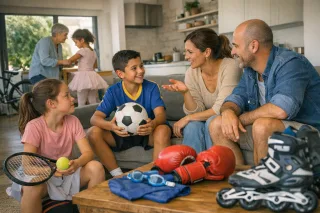
- swimming, climbing, skating, or martial arts.
Giving choices helps the child feel some control. Often, the problem is not movement itself, but the feeling of being forced.
4. Look for enjoyment, not performance
For many children, the entry point into movement is play. Climbing stairs, jumping on cushions, playing tag, playing at the park, walking the dog, dancing freely to music, or setting up a small course at home can be enough to build active habits.
The focus can be: “How can we move our bodies today in a fun way?” instead of “What sport will you do so you learn discipline?”
5. Make movement part of family life
Children are more likely to join in when they see adults moving without drama. A walk after dinner, walking some routes instead of driving, kicking a ball at the weekend, or cycling as a family can be more effective than insisting on signing up for an activity the child experiences as punishment.
Also, when movement is shared, it no longer feels like a child-only obligation.
6. Respect your child’s personality
Some children like challenges, competition, and groups. Others prefer individual, predictable, and quiet activities. Some like rhythm and music; others like jumping and exploring; others only feel comfortable in small, safe settings.
The parent’s role is not to shape the child into an ideal “sporty child”, but to help them develop healthy habits in a way that suits them.
How to encourage without applying too much pressure
Encouraging is different from forcing. Encouraging means introducing, accompanying, and supporting. Forcing means insisting despite suffering, fear, or persistent rejection.
Some balanced strategies:
- Keep routines short: 15 to 20 minutes of movement already counts.
- Start slowly: an insecure child may need time to watch before taking part.
- Use positive language: talk about energy, fun, a break for the brain, and well-being.
- Praise real effort: “I liked seeing you try,” instead of “You have to win.”
- Don’t turn every activity into a test: if the child feels constantly evaluated, spontaneity disappears.
It also helps to choose moments when your child is more available. A tired, hungry, or already overwhelmed child is usually less receptive to anything new.
When the issue may be more than “not liking it”
In some cases, resistance to sport may be linked to a difficulty that deserves attention. It is worth observing whether the child:
- always avoids physical activities, even simple ones;
- becomes very anxious before PE lessons or training;
- often complains about pain, embarrassment, or fear of making mistakes;
- has great difficulty coordinating movements;
- is very sensitive to noise, touch, uniforms, or crowded environments;
- suffers from comments by peers or coaches;
- seems sad, withdrawn, or has very low self-esteem.
In these cases, it may be useful to speak with your child’s paediatrician, class teacher, school psychologist, or another health professional to understand whether anxiety, motor difficulties, sensory issues, or another factor is involved.
The role of school and PE
School can be an important place to discover movement, but it can also be a source of shame if the child feels exposed. It helps to keep in touch with teachers when there is repeated resistance, fear of participating, or conflict around lessons.
In Portugal, PE is part of the school curriculum, but how the child experiences that subject matters a lot. The goal should not be humiliation or exposure, but participation, respect, and realistic progress. If the child has specific needs, motor difficulties, or significant anxiety, the school can help adjust strategies.
What to say and what to avoid
Helpful phrases:
- “Do you want to try, and then we’ll see?”
- “You don’t have to be the best to learn.”
- “Let’s find an activity that makes you feel good.”
- “The important thing is to move your body and have fun.”
Phrases that usually make things worse:
- “You’re being lazy.”
- “You have to like it because it’s good for you.”
- “Everyone does it.”
- “If you don’t go, you’ll fall behind.”
A message repeated with respect can have more impact than lots of insistence. The child needs to feel that the adult wants to help, not win an argument.
If my child has never wanted to do sport, is everything wrong?
Not necessarily. Some children do not identify with organised sport and still grow up healthy, active, and balanced. The essential thing is that they do not spend all their time sitting still, and that they find regular ways to move.
It is also important to remember that tastes change. A child who rejects football today may be interested in swimming, dance, skating, or climbing a year from now. The adult’s role is to keep the door open, without pressure or shame.
When to seek help
Consider speaking with a professional if the refusal to do sport comes with intense anxiety, frequent physical complaints, sadness, isolation, marked motor difficulties, or significant distress. The sooner you understand what is behind the resistance, the easier it is to find a suitable solution.
If you suspect motor learning difficulties, emotional issues, or specific needs, an assessment may help guide the family and the school.
In summary
A child who does not like sports does not need to be forced into it in order to “learn to enjoy it”. The most helpful approach is to listen, observe, and suggest movement in a light, varied, and respectful way. When adults reduce pressure and increase confidence, the child is more likely to try, discover preferences, and build healthy habits for life.
Sport can be a useful tool, but it is not the only one. For many children, the journey starts with play, moving the body, and feeling that they can take part without fear of failure.