Choosing a sport for a child may seem simple, but many families quickly run into doubts. Should it be an individual or team sport? Is the most important thing to burn energy? What if the child does not like it? What if they ask to change every month?
The good news is that there is no perfect choice for every child. There is, however, a better choice for each moment, age, and personality. The best sport is not necessarily the most “complete,” the most famous, or the one the parents did as children. It is the one the child can enjoy, attend regularly, and fit into family life without too much stress.
More than producing athletes, the goal is to help children move, gain confidence, learn rules, deal with frustration, and build healthy habits. When sport is well chosen, it can become a great source of enjoyment, health, and balance.
What to consider before choosing
Before enrolling a child in a sport, it is worth looking at a few important points.
1. Age and stage of development
Not all sports make sense at the same age. Young children need, above all, to play, run, jump, climb, throw, balance, and try different movements. At this stage, the priority is often not “training,” but developing coordination, body confidence, and a love of physical activity.
As children grow, some are ready to benefit from sports with more rules, more technique, and a greater weekly commitment. Even then, it is important to respect each child’s pace. A 5-year-old, for example, may need a very playful approach, while a 10-year-old may cope better with more structured instruction.
2. The child’s personality
Some children enjoy groups, noise, and constant movement. Others prefer calmer, more predictable settings with less exposure. Some love competition. Others freeze when they feel judged.
A very shy child may feel better in a sport where they can progress at their own pace. A more outgoing child may enjoy team sports, where interaction and a sense of belonging matter. A child who is very sensitive to frustration may need a practice where mistakes are seen as a normal part of learning.
Temperament does not permanently determine the best sport, but it can help make the first experience more comfortable.
3. Enjoyment comes first
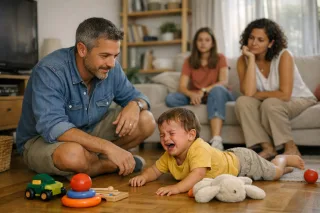
A healthy sport is one the child wants to repeat. If every lesson involves tears, resistance, stomach aches, constant complaints, or ongoing discomfort, it is worth pausing to understand what is going on.
Sometimes the problem is not the sport itself. It may be the coach, the group, pressure, the schedule, or the way the activity is being presented. Even so, enjoyment should be a central criterion. Without enjoyment, motivation tends to drop and practice becomes an obligation.
Individual or team sport?
This is one of the first questions many parents ask. There is no single right answer for all children.
Individual sports
Examples: swimming, gymnastics, athletics, tennis, martial arts, dance.
These can be a good option for children who like autonomy, focus, and personal progress. They often allow more individualised work and can help children understand their own bodies and goals better.
They can also be useful for children who feel overwhelmed in large groups or who still need confidence before dealing with team dynamics.
Team sports
Examples: football, basketball, volleyball, handball, hockey, rugby.
These are useful for developing cooperation, communication, respect for rules, and a sense of belonging. For some children, social connection is the main reason they keep going. They feel motivated by friends, the team, and the energy of the group.
On the other hand, some children may struggle more with comparisons, internal competition, or fear of making mistakes in front of others. In these cases, it may be better to start with a more individual sport or with a less competitive environment.
Health: moving the body without overdoing it
Sport brings clear health benefits: it improves cardiovascular fitness, strength, coordination, posture, balance, and even sleep. It also helps many children release tension and regulate their emotions better.
But too much training or very early specialisation can cause problems. A child does not need to do an intense sport to “make the most” of the benefits. What they do need is frequent movement, variety, and rest.
It is important to watch for signs of overload, such as constant tiredness, repeated pain, irritability, lack of motivation, sleep problems, or persistent refusal to go to training. If that happens, it may be necessary to reduce the load, adjust schedules, or even change sport.
It is also important to make sure the child has a balanced diet, enough hydration, and sufficient time to play, rest, and do schoolwork. Sport should fit into life, not take it over.
How to fit it into family routine
Many good ideas fail not because of the child, but because of logistics. A sport may be excellent on paper, but impractical if it requires long travel, incompatible schedules, or costs that are too high.
Before choosing, it helps to ask simple questions:
- Is the location close to home or school?
- Does the schedule work with dinner, baths, and bedtime?
- Is there family support for drop-off and pick-up?
- Is the monthly cost sustainable?
- Will there still be time for schoolwork, rest, and family life?
When routine is too tight, sport can become a source of stress for everyone. A realistic choice is more likely to be maintained over time.
Letting the child take part in the decision
Even when parents guide the choice, children should have a voice. They may not decide everything alone, but they should be able to try, say how they feel, and help choose between realistic options.
A good strategy is to suggest two or three sports and observe the child’s reaction. After a trial class, ask open questions: “Did you like it? What was fun? What was hard? Do you want to go back?”
Avoid turning the choice into a test of maturity. A child does not need to explain everything with adult arguments. Sometimes the body knows before the mind does: “This is not for me” or “I want to keep going.”
If the child wants to quit
It is normal for interest to fade at times. That does not always mean a permanent decision to stop. It may be fatigue, adjustment to the group, technical difficulty, or simply a wish to try something else.
If your child wants to stop, first try to understand why. There is a difference between a temporary dip in enthusiasm and a consistent rejection. In some situations, it makes sense to insist for a few more sessions, especially if the reluctance is tied to initial fear or insecurity. In others, forcing the issue may push the child further away from physical activity.
The goal is not to teach children never to quit. The goal is to teach them to choose responsibly, commit for a reasonable period, and communicate honestly about how they feel.
What if the child is not very sporty?
Not every child likes competition, chasing a ball, or spending time in a gym. That does not mean they “don’t like sport.” They may simply prefer other forms of movement.
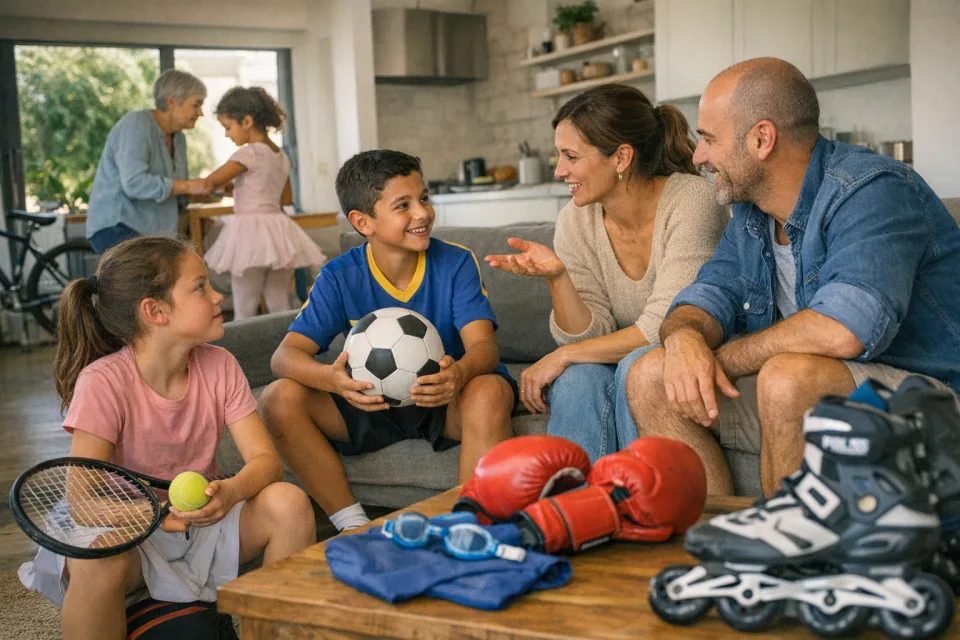
In those cases, it is worth trying alternatives: swimming, dance, martial arts, climbing, skating, cycling, family walks, outdoor games, or mixed activities that combine movement and fun. The important thing is to avoid the idea that only one type of sport counts.
For some children, the path starts with small experiences. Enjoyment can grow with confidence. The first attempt does not always tell the whole story.
Competition: yes or no?
Competition is not bad in itself. It can teach focus, persistence, self-control, and respect for rules. But too much of it can increase anxiety, comparison, and fear of failure.
In childhood, the process matters most. Winning may be exciting, but it should not be the only measure of value. If a child feels they are only appreciated when they win, sport loses emotional safety.
It is helpful to praise effort, attendance, courage, and progress, not just results. Phrases like “I saw you try again,” “I liked your persistence,” and “You are learning” help more than focusing only on the scoreboard.
How to tell if the sport is a good fit
After a few weeks, look for simple signs:
- Does the child go with less resistance?
- Do they talk about the activity at home?
- Do they show some joy or curiosity?
- Can they balance it with sleep, school, and meals?
- Are they gaining confidence and independence?
If the answer is mostly yes, the choice is probably working. If there is constant distress, it may be time to adjust.
A choice that can change over time
It is important to remember that choosing a sport is not permanent. A child may enjoy swimming at 6, football at 9, and climbing in their teens. Or they may keep the same sport for many years. Both are normal.
What matters most is that physical activity remains part of the child’s life in a healthy, balanced, and realistic way. Sport can be a place for friendship, discipline, joy, discovery, and growth. But it should begin as a space where the child feels capable and at ease.
If parents keep the focus on enjoyment, health, and a sustainable routine, there is a much better chance that the child will build a positive relationship with movement for life.
Conclusion
Choosing a sport for a child is not just choosing an activity. It is choosing an environment, a routine, and a way to grow. The best decision is usually the one that respects the child’s age, temperament, family availability, and, above all, the child’s own interest.
When there is enjoyment, effort feels lighter. When there is health, the body benefits. When there is a realistic routine, the practice can last. And it is in that combination that sport stops being an obligation and becomes a source of well-being for the whole family.