Why it’s important to think about home safety early
Once a baby starts rolling, crawling, sitting up or taking first steps, the home stops being predictable. Everything gets explored with hands, mouth and endless curiosity. That is when the risk of falls, burns, poisoning, cuts and choking increases.
The good news is that most household accidents can be prevented with simple changes. You do not need to turn your home into a fortress, but you do need to think ahead about what could happen at baby height. The goal is to create a safe environment without losing comfort or family life.
This article helps you understand the main dangers in each room, with special attention to falls and objects that should be kept out of reach.
The biggest risks for a baby at home
Babies do not recognise danger. To them, a remote control, a coin, a plastic bag, an electrical cable or a step may just be another interesting object. So the risk is not only how high the baby can reach, but also what they can pull, open, grab or put in their mouth.
The most common home accidents at this age include:
- falls from beds, sofas, changing tables or stairs
- falls while learning to sit or walk
- choking on small parts or unsuitable food
- burns from hot liquids, sockets or electrical devices
- poisoning from medicines, cleaning products or toxic plants
- drowning in buckets, baths or small pools
Keeping these risks in mind helps you organise the home more effectively.
How to prevent falls at home
Falls are one of the most common concerns in the first years of life. Many happen in a split second, when an adult steps away “just for a second”. That is why prevention needs both supervision and a well-organised space.
Beds, sofas and raised surfaces
Even a very small baby can roll unexpectedly. Never leave a baby alone on a bed, sofa, changing table or table, even if they seem still. If you need to move away, take the baby with you or place them somewhere safe, such as a cot or an appropriate playpen.
If your baby sleeps in the parents’ bed, pay extra attention to pillows, loose blankets and the risk of falling from the sides. Ideally, the sleep space should always be simple, firm and free of unnecessary items.
Stairs and hallways
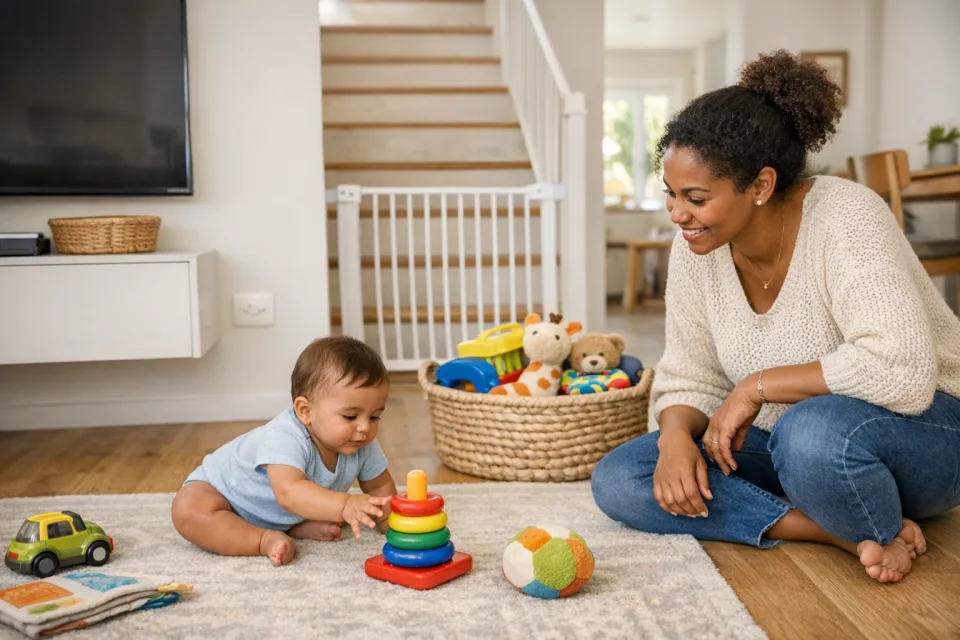
Stairs should have safety barriers at both ends, properly installed and suitable for the child’s age. When your baby starts crawling or walking, do not rely on distant supervision. An open door can be enough for a fall to happen.
It is also wise to avoid toys, shoes or boxes in hallways, as they increase the risk of tripping once the child begins moving around more freely.
Changing tables and quick nappy changes
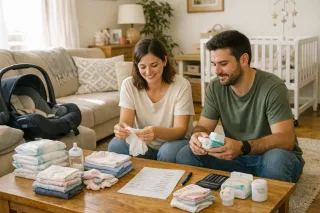
Prepare the changing area before placing the baby down. Have everything within reach: nappy, wipes, clean clothes and cream, so you do not need to leave the baby alone even for a moment. If possible, choose a low, stable surface. Many accidents happen because an adult thinks the baby is still not moving much, but that can change overnight.
Rugs, floors and lighting
Loose rugs can slip or curl up. Choose non-slip rugs or remove those that are not essential. Keep the floor dry and clear of objects. Good lighting, especially at night, helps prevent falls when going to the kitchen, bedroom or bathroom.
Dangerous objects: what should be kept out of reach
A simple rule helps a lot: if it fits in a baby’s mouth, it can be dangerous. But the risk goes far beyond that. Large objects can also fall, cause injury or be pulled down.
Small objects and choking hazards
Coins, button batteries, pins, earrings, buttons, lids, parts from older toys, stickers and small beads should be kept out of reach. Button batteries are especially dangerous and need extra attention, as they can cause serious injury if swallowed.
If there are older siblings, it is important to store toys with small parts in closed boxes and explain that they should not be left on the floor or within the baby’s reach.
Medicines and cleaning products
Medicines, vitamins, alcohol, detergents, bleach, toilet cleaners, rubbish bags and insecticides should be stored in high, locked cupboards, never on accessible countertops. The best option is to use childproof locks on low cupboards, especially in the kitchen and bathroom.
Even containers that seem harmless can be dangerous if they are clearly labelled or look colourful and attractive. Never transfer cleaning products into water bottles or food containers.
Cables, sockets and electricity
Sockets should have suitable safety covers and electrical cables should not hang loose. Avoid extension leads on the floor and keep chargers, adapters and appliances out of reach. Toasters, irons, heaters and fans should be used carefully and always kept away from the baby.
Sharp and hot objects
Knives, scissors, blades, needles and kitchen tools should be stored in closed places. As for hot drinks, pans and freshly cooked dishes, never leave them near the edge of a table. A tug on an arm or tablecloth can cause serious burns.
Safety in each room of the home
Bedroom
In the baby’s bedroom, the priority is a safe sleep space. The cot should have a firm mattress, with no pillows, large soft toys, rolled-up bedding, loose blankets or padded bumpers. Although they may look cosy, these items increase the risk during sleep.
If the child is already starting to stand, the mattress should be adjusted to prevent falls. Furniture such as chests of drawers and shelves should be fixed to the wall so they do not tip over when the child pulls at drawers.
Bathroom
The bathroom has several dangers: water, slippery surfaces, medicines and hygiene products. Never leave a baby alone in the bath, not even for a moment. Prepare everything before bath time so you do not need to leave the room.
Keep the toilet lid closed, store razors, perfumes and cosmetics out of reach, and use non-slip mats on the floor. Bath water should be warm, never hot, and the tap can be a point of contact with excessive heat.
Kitchen
The kitchen is one of the highest-risk rooms. Whenever possible, the baby should stay away from the cooking area. Use the back burners, turn pan handles inward and keep the baby away whenever there are hot liquids, steam or frying oil.
Cabinets with pans, glasses and cutlery may need childproof locks. Avoid leaving small whole fruit, nuts or hard snacks within reach, especially once the baby has started exploring solid foods.
Living room
In the living room, the main risks are usually furniture, cords, decorative items and windows. Secure televisions and shelves, hide cables and remove fragile or heavy objects from coffee tables. Candles, vases, bottles and ornaments should be kept out of reach.
If you have a fireplace, heater or wood-burning stove, it is essential to use protective barriers. Even after being turned off, some appliances remain hot for quite a long time.
Hallways and entrances
These are passage areas where shoes, bags, keys, umbrellas and small objects often pile up. Keep the floor clear and use closed storage to avoid trips and access to loose items.
How to adapt your home without going overboard
Not every family can make all the changes at once. The most important thing is to start with the biggest risks. A useful way to organise this is to think in three levels: what must be done now, what can be done in the next few days, and what can be improved later.
Prioritise:
- stair protection
- safe storage of medicines and toxic products
- furniture fixed to the wall
- protected sockets
- constant supervision in bath and kitchen areas
- a cot and sleep space free of loose objects
It also helps to look at the home from the baby’s point of view. Kneel or sit on the floor and see what is reachable. Often, objects thought to be “out of reach” are actually at the perfect height for a curious hand.
Supervision habits that make a difference
Home safety does not depend only on equipment. It also depends on consistent habits. For example, it is important not to rely only on previous days’ experience. A five-month-old baby may barely move, and two weeks later may already be rolling and reaching for everything.
Helpful routines include:
- checking the home every day, especially after visitors
- keeping cupboard doors and bathroom doors closed
- not leaving hot drinks near table edges
- removing coins, keys and small objects from floors and sofas
- always supervising baths and meals
- teaching older siblings to put away small toys
With routine, safety becomes easier to maintain.
What if the baby has already fallen or touched a dangerous object?
First, stay calm. Observe the baby and check for pain, unusual sleepiness, vomiting, difficulty breathing, inconsolable crying, cuts or signs of a head injury. In the case of a fall with symptoms, or if you suspect the baby has swallowed a battery, medicine, chemical product or sharp object, seek medical help immediately.
If you are not sure what the baby touched, swallowed or inhaled, do not wait to see if “it passes on its own”. In risk situations, prompt assessment matters.
When to seek professional help
If there is a fall with loss of consciousness, repeated vomiting, seizures, difficulty breathing, significant bleeding or suspected poisoning, contact SNS 24 immediately or go to urgent care. In an emergency, call 112.
It can also be helpful to ask your paediatrician or child health nurse to review home safety, especially if the baby was born prematurely, has motor difficulties, epilepsy, vision problems or another condition that increases the risk of accidents.
Conclusion
Protecting a baby at home is an ongoing process. As they grow, the dangers change, and so do the solutions. What seems enough today may no longer be enough tomorrow. That is why it is worth reviewing the home often, adjusting routines and staying focused on the most common risks: falls, small objects, toxic products, heat, water and electricity.
A safe home is not one that is perfect. It is one that is designed to support the baby with attention, simplicity and consistency.
FAQs
At what age should I start thinking about home safety?
Ideally before the baby starts rolling or crawling. In practice, it is worth preparing the home from birth, because risks change very quickly in the first few months.
Are socket covers enough?
They help, but they do not replace supervision and organisation. Cables, extension leads and electrical appliances still need care.
What matters most: stairs, kitchen or bedroom?
All of them matter, but the biggest risks are usually in the kitchen, on stairs, in the bathroom and in the places where the baby sleeps or is changed.
Do I need to buy lots of equipment to make the home safe?
Not necessarily. Often, keeping dangerous objects out of reach, closing cupboards, securing furniture and supervising closely already reduces the risk a lot.
Is it normal to feel afraid of accidents at home?
Yes. Feeling worried is common and can even help you stay more alert. The important thing is to turn that concern into practical, realistic measures.