Why it is important to plan for a baby’s expenses
A baby’s arrival changes both daily life and the family budget. Nappies, clothes, feeding, equipment, health care, and transport all become part of monthly expenses. If you prepare calmly, you can avoid impulse buying and choose only what you truly need.
Saving does not mean buying the cheapest option in every case. It means understanding what is essential, what can be reused, and where it is worth investing to ensure safety. In many situations, spending a little more on a safe, durable item ends up being worth it.
Start by separating the essentials from what can wait
Many baby checklists include dozens of products, but not all of them are needed right away. Before buying, divide items into three groups: what is essential for the first days, what can be bought later, and what is optional.
Essentials usually include: a safe place to sleep, an appropriate car seat, nappies, comfortable clothes, basic hygiene products, a blanket, bottles if needed, and a few feeding items if the baby will not be exclusively breastfed.
Things that can wait include many toys, extra clothes, decorative items, and some equipment the family will only use for a short time.
Where it is worth investing without hesitation
There are purchases where safety should always come first. Here are some examples:
- A certified car seat suitable for the baby’s weight and height: one of the most important items for keeping a baby safe in the car.
- A safe cot or bed: it should be stable, with no loose parts and with a suitable mattress.
- Safe sleep products: no pillows, large soft toys, or loose blankets in a newborn’s sleeping space.
- Certified hygiene and feeding items: dummies, teats, and bottles should meet safety standards and be used correctly.
In these cases, buying second-hand can be a good solution only if the item has a known history, is in perfect condition, and meets current standards. Even so, some items should not be reused, especially if the use history is unknown or if they may have been involved in a collision, in the case of car seats.
How to save on baby clothes
Babies grow very quickly and often wear each size only for a short time. For that reason, it does not pay to buy too many clothes at the beginning.
A simple way to save is to choose practical pieces that are easy to dress and wash. Bodysuits, sleepsuits, and comfortable pyjamas are often more useful than elaborate outfits. Choose soft, breathable fabrics that suit the season.
Another strategy is to buy only a few items in smaller sizes and keep part of the budget for the next sizes. You can also accept used clothes from family or friends, as long as they are in good condition and washed with products suitable for sensitive skin.
Nappies and hygiene: small choices that make a difference
Nappies and hygiene products represent a significant part of monthly spending. Here, saving means comparing prices and avoiding buying too much at the start. Many families discover that their baby needs fewer products than they expected.
For daily hygiene, water, cotton pads or compresses, and a protective cream when needed are usually enough. You do not always need to buy lots of cosmetics. The fewer different products you use, the easier it is to see what works and what may irritate the baby’s skin.
If you want to try wipes, creams, or shampoos, do so carefully and watch for any skin reaction. If in doubt, speak to your paediatrician or pharmacist.
Feeding: buy only what makes sense for your family
When it comes to feeding, the best way to save depends a lot on how your baby will be fed. If breastfeeding is going well, many costs for bottles and formula can be avoided. Even so, it can be useful to have a few support items, such as breast pads, storage containers, and a comfortable cushion if the family finds one helpful.
If formula milk is needed, it is important to always follow the guidance of a health professional. It is not worth choosing brands based only on price without checking whether the product is suitable for the baby.
For bottles and teats, the most important things are quality, hygiene, and age suitability. Buying fewer items but of good quality is usually more sensible than collecting several sets that will never be used.
Second-hand items: when they can help and when caution is needed
Buying second-hand is one of the most effective ways to save money, but not everything should be reused without care. Some items can be perfectly safe second-hand, such as clothes, some simple toys, furniture in good condition, and certain maternity accessories.
On the other hand, there are situations where you should be more demanding. Check whether the cot is stable, whether there are any broken parts, whether the mattress fits properly, and whether there is any loose paint or exposed screws. In the case of a car seat, always confirm its history: whether it has been in an accident, whether it has original parts, and whether it is still within the use period recommended by the manufacturer.
Avoid used products without clear information about their origin, especially if they involve safety, sleep, or transport.
How to make your home safe without overspending
Many parents want to baby-proof the house and end up buying too many accessories. In practice, safety depends more on consistent habits than on lots of products.
Some simple and affordable measures make a difference:
- secure heavy furniture to the wall;
- keep electrical cords out of reach;
- store medicines and cleaning products in high or locked places;
- use safety protections only where there is a real risk;
- keep changing and resting surfaces tidy and free of loose objects;
- always supervise the baby in elevated places such as a bed, sofa, or changing table.
Instead of buying many safety accessories right away, look around your home and identify the real risks. That way, you only spend where it is necessary.
The car: where saving should never mean risk
If there is one area where you should not cut too much, it is car safety. The car seat must be suitable for the baby’s age, weight, and height, and installed correctly. A seat that is the wrong type or badly fitted can greatly reduce protection.
If you are considering a used car seat, first check the manual, confirm the approval label, and inspect everything carefully. Never use a seat that has been in a collision, even if it looks intact from the outside.
If you have doubts, ask for help in a specialist shop or from someone with experience. It is better to clarify things before than to risk your baby’s safety to save a few euros.
Hand-me-downs, gifts, and baby lists
A baby registry can be very useful to avoid duplicate purchases. It also helps family and friends give things that are actually needed.
If someone wants to give a gift, you can suggest useful items such as nappies, clothes in larger sizes, hygiene products, or books for later. Often, practical help is more valuable than decorative items.
Borrowing from relatives can also ease the budget a lot. A cot, a breast pump, or a pushchair that has been stored in good condition can make a big difference, as long as it is clean, functional, and safe.
How to organise the budget in the first months
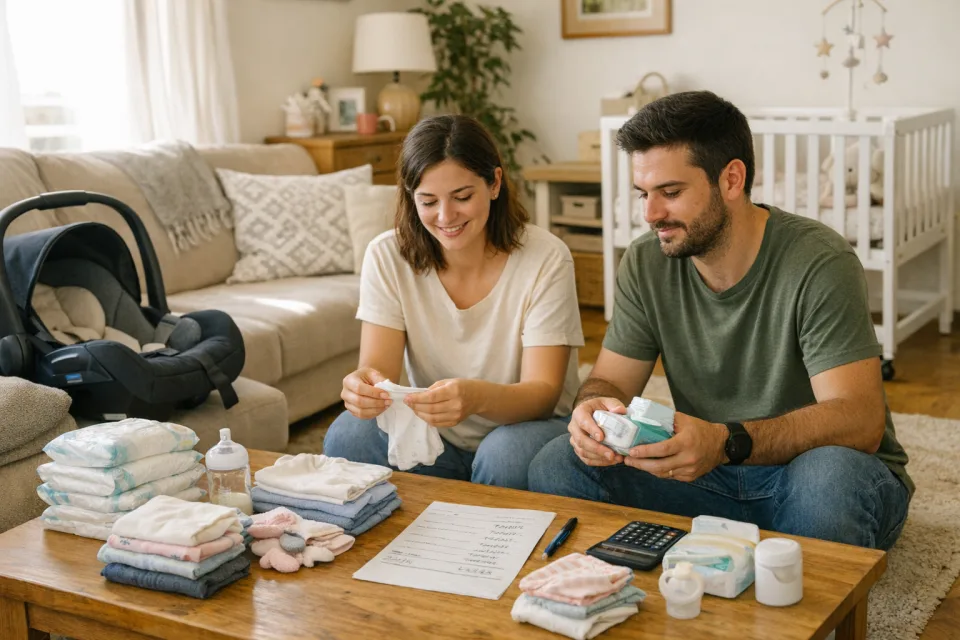
To save without stress, it helps to make a simple estimate of monthly expenses: nappies, milk, medicines, travel, clothes, and small replacements. Then compare that amount with the family income and try to set aside a buffer for unexpected costs.
Buying in advance only what is needed for the first few weeks helps avoid waste. Babies can grow quickly, change routines, and may not adapt to some products. Starting with the basics gives you more flexibility.
Another tip is to follow promotions without falling into the trap of buying in bulk just because something is cheaper. If it will not really be used, it is not a saving.
Common mistakes that increase spending
Some mistakes are very common and end up making a baby’s arrival more expensive:
- buying too many clothes in small sizes;
- choosing below-standard safety items because they are cheaper;
- stockpiling products the family will not use;
- buying impulsively during anxious moments;
- ignoring the possibility of accepting help from family or friends.
Another mistake is trying to solve everything at once. Many needs only become clear after the baby is born. Giving the process time helps you make better choices.
What really matters
Saving money when a baby arrives is possible when there is a balance between practicality and safety. The goal is not to have everything, but to have what is needed to care for your baby well and calmly.
If you invest in safety, buy carefully, and accept help when it is available, the family can reduce costs without compromising the essentials. A baby needs love, presence, cuddles, and safe care. The rest can be simple.
With organisation, support, and thoughtful choices, the baby’s arrival can be lighter for the family and safer for everyone.