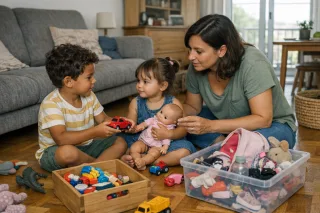

Choosing a nursery: a decision that goes far beyond location
Choosing a nursery is often one of the first big decisions after having a child. For many families, there is urgency, few available places, and a lot of emotion mixed with guilt, doubt, and exhaustion. It is natural to want a place where your baby will be safe, well cared for, and respected at their own pace.
There is no perfect nursery for every child. There is, however, the nursery that is most suitable for your family and your child at that moment. Some babies need more cuddles and a slower settling-in period. Others do well in larger groups. Some families value proximity to home or work above all else; others care more about the staff team, routines, outdoor space, or daily communication.
The goal of this article is to help you ask useful questions before deciding. A well-prepared visit can tell you much more than a nice-looking brochure or website.
What matters to assess before deciding
In practice, a nursery must meet several needs at once: safety, affection, hygiene, routine, food, stimulation, and communication with parents. When you visit, try to observe not only what is said, but also the atmosphere, how adults speak to children, and how babies and toddlers respond.
A good nursery is not just one with new facilities. It is one where adults seem to know the children, where there is organisation without being overly rigid, and where your child can be welcomed with respect for their development.
Essential questions about the staff
The staff is often the most important factor. These are the people who will spend many hours with your child and support them through crying, sleep, feeding, and play.
- What training does the team have?
- How many adults are with each group of children?
- Is there a qualified educator, an assistant, and cover for absences?
- Do staff stay in the room throughout the day?
- Is there first-aid and child-safety training?
- How do they handle tantrums, crying, and settling-in difficulties?
More than listening to polished answers, notice whether the team speaks about children with respect and genuine interest. A positive sign is when adults explain how they learn each baby’s habits, how they support the transition between home and nursery, and how they communicate clearly with parents.
Questions about safety and health
Safety should be a central criterion. It is not always obvious at first glance, so it is worth asking directly.
- How do they control who enters and leaves the nursery?
- Is there a record of drop-off and collection?
- Are there evacuation plans and emergency procedures?
- How are hands, toys, and surfaces cleaned?
- How do they deal with fever, vomiting, diarrhoea, or suspected contagious illness?
- Are medicines only given with written authorisation?
You can also ask about the physical space: protected sockets, stairs, gates, cots, mattresses, age-appropriate toys, and separate areas for rest, meals, and play. A safe environment should be clean, but also designed to help prevent accidents.
How sleep and rest routines work
Sleep is very important in the first years of life, and the way the nursery handles it can greatly affect your baby’s well-being. Ask:
- How is the transition to sleep handled?
- Are naps adapted to each child’s rhythm?
- Is there a quiet, dark or semi-dark space for sleeping?
- How do they support babies who need cuddles, a dummy, or another sleep ritual?
- Do they inform parents about naps and changes in sleep patterns?
Some children sleep easily at nursery, while others need time. Ideally, the team should be ready to respect individual differences rather than imposing a rigid routine simply for the convenience of the group.
Questions about food and meals
Food is another key point, especially if your baby is starting complementary feeding or has specific dietary needs. It is important to understand how the nursery organises meals.
- Who prepares the meals?
- Are menus displayed or sent to families?
- Is there flexibility for allergies, intolerances, or specific diets?
- How do they manage the introduction of new foods?
- Do they respect the child’s appetite and signs of hunger and fullness?
- Is there pressure to finish everything, or a calmer and more respectful approach?
If your child is still having breast milk or formula, also check how milk is stored and warmed, and how feeding times are communicated. If your child is already on solid foods, it is worth checking whether the nursery follows guidance that matches your family’s approach.
Questions about settling in and starting nursery
A careful settling-in process makes a big difference. Starting nursery is a major change, for both baby and parents. Ask how this process works.
- Is there a gradual settling-in period?
- Can parents stay during the first few days?
- How is separation introduced step by step?
- What do they do when a child cries a lot or resists separation?
- How do they build trust between baby, family, and staff?
Be cautious of answers that minimise a child’s distress, such as “they’ll get used to it quickly” or “just let them cry.” Settling in takes time, patience, and sensitivity. Crying at separation can be normal, but that does not mean it should be ignored.
How communication with parents works
A good relationship with the family is an important sign of quality. The nursery should be able to keep you informed without drama, and listen without judgment.
- How do they communicate about the child’s day?
- Is it via a notebook, app, messages, or direct conversation?
- Do they share information about food, sleep, nappies, mood, and small incidents?
- How do they communicate falls, fever, or conflict situations?
- Can parents ask questions and share specific guidance?
Communication does not need to be excessive, but it should be clear and honest. If something important happens, the family should be informed quickly and transparently.
The emotional atmosphere matters too
This is not always easy to assess in a short visit, but it is worth paying attention to the emotional atmosphere. Do the children seem calm? Do the adults speak in a gentle voice? Is there closeness and respect? Or does the place feel tense, rushed, or impersonal?
A nursery that is emotionally healthy tends to have:
- attentive and patient adults;
- clear rules without unnecessary harshness;
- space for cuddles and comfort;
- age-appropriate stimulation;
- respect for each child’s pace.
For babies and young children, attachment is essential. This is not about “spoiling them too much,” but about responding consistently to basic and emotional needs.
Outdoor space, play, and stimulation
A nursery should not just be a place to “look after” children while parents work. It should also be a space for development. Ask how play time is organised and what they do to support language, movement, coordination, and independence.
- Is there outdoor space?
- Do children go outside regularly?
- What kind of activities do they do throughout the day?
- Is free play valued?
- Are there books, music, stories, sensory activities, and exploration?
For babies and toddlers, less can be more. What matters most is simple, safe, age-appropriate experiences, without too much stimulation or overly structured activities.
Practical issues that also make a difference
Beyond educational and emotional aspects, there are practical details that can make family life much easier.
- Opening and closing times
- Flexibility in occasional situations
- Holidays and closure periods
- Rules about nappies, clothes, and personal items
- Extra costs beyond the monthly fee
- Waiting list and admission criteria
It is also useful to ask what happens if the child is unwell and whether there are specific rules for returning after fever or infection.
Warning signs not to ignore
Even if a nursery seems convenient in terms of price or location, there are signs that deserve attention:
- lack of transparency in answers;
- an unorganised or very noisy environment with little control;
- impatient or unkind adults with children;
- groups with too many children for too few adults;
- doubtful hygiene;
- excessive pressure to finalise enrolment;
- your concerns as a parent being dismissed.
If you leave a visit feeling persistently uneasy, it is worth trusting that feeling. Sometimes your body notices what you have not yet been able to put into words.
How to decide with more confidence
After your visits, it can help to make a short comparison list with the things that matter most to your family: safety, proximity, staff relationship, food, settling in, communication, and cost. Try not to look for perfection in every area. Focus on what is truly essential and what is harder to compromise on.
If possible, observe your child during and after the visit. Some babies stay calm in a particular setting; others clearly show discomfort. That is not always decisive, but it can help.
You can also speak to other parents, while remembering that every family’s experience is different. What worked for one baby may not be best for another.
Conclusion
Choosing a nursery is an important decision, but it does not need to be made blindly. Asking concrete questions helps you understand whether the space is safe, whether the staff are sensitive, and whether the routine respects your child’s development. More than attractive facilities, look for a place where your child is seen as a person, not just another place on the list.
If the decision still feels difficult, choose the place that gives you the most confidence, transparency, and care. In the early years, that matters a great deal.
Note: this topic involves childcare and may vary depending on each family’s and institution’s circumstances. When needed, confirm rules, licences, and conditions directly with the nursery and the relevant authorities.
FAQ
How far in advance should I look for a nursery?
It is best to start looking several months in advance, especially in areas with high demand. In some cases, waiting lists are long and it is worth visiting several options early.
What matters most: price, proximity, or quality?
It depends on the family’s situation, but safety, the quality of the staff, and the way the child is treated should carry a lot of weight in the decision. Proximity and price also matter, but they should not be the only criteria.
Is it normal for a baby to cry during settling in?
Yes, crying is often part of the initial separation. What matters is whether the nursery handles that moment with respect, patience, and a gradual settling-in approach.
Can I visit the nursery more than once?
Yes. If you still have doubts, asking for a second visit can help a lot. Seeing the space on different days or at different times can also give you a more realistic picture of how it works.
How do I know if the nursery is suitable for my baby?
Observe the staff, safety, hygiene, communication with parents, and emotional atmosphere. If you feel confident and can see that your baby’s needs are respected, you are on the right track.