Traveling with a baby: what really helps
Traveling with a baby can be a beautiful experience and, at the same time, exhausting. Some parents feel excited about their first family getaway, while others feel uneasy just thinking about the packing, schedules, and nights away from home. Both reactions are normal.
The truth is that traveling with a baby rarely goes exactly as planned. But that does not mean it will go badly. With enough preparation, realistic expectations, and some flexibility, it is possible to travel more calmly and enjoy family time better.
This article covers the essentials about packing, sleep, feeding, and unexpected issues, with a practical focus and simple solutions for everyday life.
Before you go: what is worth thinking about
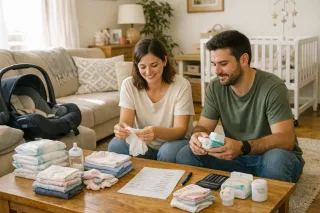
Before you start packing, it helps to answer a few questions:
- How many days will you be away?
- Is the destination hot, cold, urban, or beach-based?
- Will you travel by car, train, or plane?
- Is the baby still exclusively breastfed, already eating solids, or in a mixed feeding stage?
- Will there be easy access to a pharmacy, supermarket, and safe drinking water?
These answers help avoid overpacking and make it easier to understand what is essential. The younger the baby, the more important it is to keep a minimally predictable routine and bring what they already use every day.
The baby’s bag: essentials without overdoing it
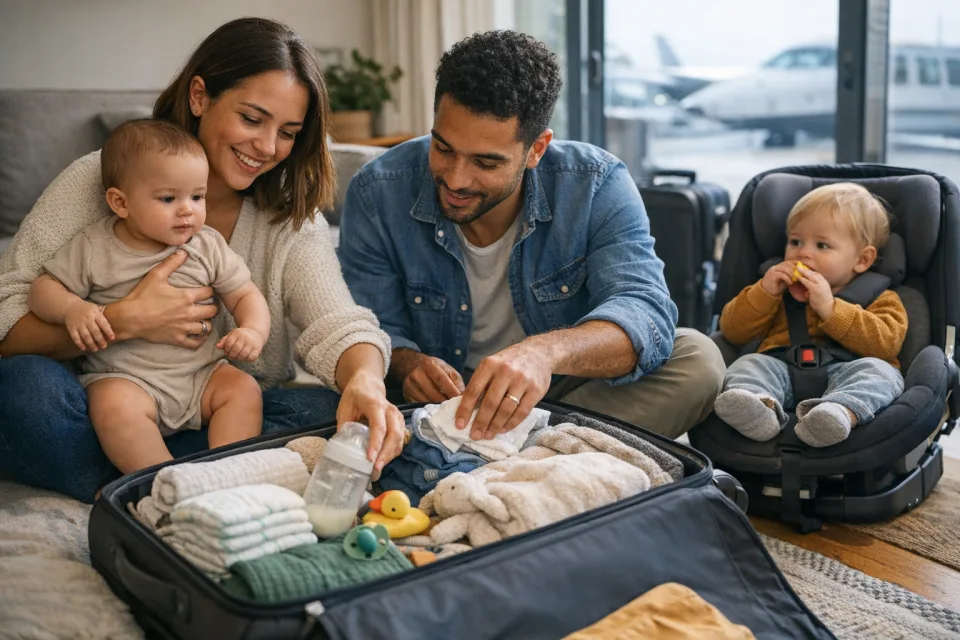
The bag is often the biggest source of anxiety. The secret is not to bring everything, but to bring what is needed so the baby and parents feel secure.
Clothes
- Bodysuits or T-shirts, enough for 1 to 2 per day depending on the destination
- Trousers, shorts, tights, or leggings according to the weather
- Pyjamas
- A light or warmer jacket, depending on the season
- Socks and a hat, if needed
- One full extra outfit in the carry-on bag
Nappies and hygiene
- Enough nappies for the journey and the first day, if you do not want to buy them right away after arrival
- Wipes
- Nappy cream
- Cloth nappies, if they are normally used
- A bag for dirty nappies
- Extra pacifiers, if the baby uses them
Sleep and comfort
- Pacifier, blanket, or comfort toy, if part of the routine
- Sleeping bag, if the baby is used to one
- A sheet or cover with a familiar smell, if that helps them fall asleep
Health
- Health card or relevant medical documentation
- Regular medication, with a doctor’s note if applicable
- Thermometer
- Saline solution
- Moisturizer or age-appropriate sunscreen, if used
If the baby takes regular medication, it is wise to bring extra and check with the pediatrician how to manage it while traveling. For an international destination, it is useful to have prescriptions or a written note about the medicine.
Traveling by car, plane, or train
The means of transport makes a big difference in how you organize the trip.
By car
On car trips, the main rule is safety: the car seat must be appropriate for the baby’s age and installed correctly. Ideally, the baby should travel with regular breaks to change position, eat, and be changed. On longer journeys, it may help to plan stops every two hours or as the family needs.
Avoid keeping the baby in the car seat for too long when not traveling. For sleep, the ideal remains a proper and safe sleep space.
By plane
On a plane, babies may feel discomfort from pressure changes, especially during takeoff and landing. Breastfeeding, bottle feeding, or offering a pacifier at those times can help. Packing a change of clothes in your carry-on is wise, as well as nappies, wipes, and something to keep the baby occupied.
It is worth checking with the airline about rules for strollers, car seats, liquids, and baby food.
By train or bus
On these journeys, the main focus is comfort: easy-to-put-on clothes, suitable snacks, small toys, and relative quiet to avoid too much stimulation. A cloth, blanket, or baby carrier can make a big difference.
Sleep away from home: how to protect the routine
Sleep is one of the topics that worries parents most when leaving home. Many babies become more restless in new environments, wake more often, or resist falling asleep.
It is not always possible to keep the usual routine minute by minute, but a few habits help:
- Keep the same bedtime sequence whenever possible: bath, pyjamas, feeding, cuddles, song, or rocking
- Bring familiar items, such as a blanket, pacifier, or sleeping bag
- Watch for sleepy cues instead of stretching awake time too long
- Reduce stimulation at the end of the day
- Look for a dark and quiet place for naps and nighttime sleep
If the baby usually sleeps in a crib and will sleep away from home, check that the place meets safety conditions. Safe sleep should always be a priority: a firm surface, with no loose pillows, heavy blankets, or objects that could pose a risk.
It also helps to accept that sleep may be disrupted for a few days during a trip. That does not mean the routine is “ruined.” Often, it is enough to return to the usual pattern when the family is back home.
Feeding while traveling: flexible, safe, and low-stress
Travel changes schedules and the baby’s appetite. Some eat less, others ask to feed more often. The important thing is to keep food safe and avoid being too rigid.
If the baby is breastfed
If the baby is breastfed, travel is often easier logistically. Even so, it can help to think about comfortable places to nurse, practical clothing, and enough breaks. In very stimulating environments, some babies feed more often for comfort.
If the baby uses a bottle
Bring the amount of formula needed, clean bottles, and hygiene supplies. If the trip is long, check how you will prepare formula safely, especially if access to safe drinking water is limited or if you may not be able to heat water properly.
If the baby already eats solids
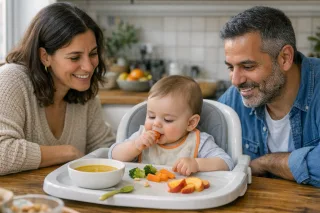
For babies who have started complementary feeding, it is best to choose practical, safe foods that are easy to carry. Useful examples include:
- Washed and prepared fruit
- Porridge or cereals suitable for the baby’s age
- Baby biscuits or snacks, if already used
- Simple food, without too much salt or sugar
Avoid improvising with foods the baby has never tried, especially while traveling, because it becomes harder to tell the difference between an allergic reaction and a common upset.
If you need to eat out, choose simple, well-cooked meals suitable for the baby’s age. Always bring safe water if the baby already drinks it.
Common unexpected issues and how to handle them
Even with preparation, problems happen. The goal is not to avoid every single one, but to know how to respond calmly.
The baby has a fever
A fever while traveling can be frightening for any family. First, observe the baby’s overall condition: are they eating? drinking? responding? very lethargic? Fever alone does not tell the whole story. If there are warning signs, it is important to seek local medical help. If the baby has an important medical history, keep that information with you.
There is diarrhea or vomiting
In these cases, hydration is essential. If the baby is very young, the risk of dehydration may be higher. Watch how often the nappies are wet, the baby’s energy level, and whether they can drink or breastfeed. If in doubt, seek medical advice.
The baby will not sleep
If the baby has trouble falling asleep, try reducing stimulation, offering cuddles, repeating a familiar routine, and accepting that it may take more time. Sometimes the baby just needs to feel safe in a new place.
Something important was lost
From the pacifier to the bottle warmer, almost every family has a small scare at some point. If possible, pack duplicates of the most important items in your carry-on. A simple plan helps: what must always be within reach, what can stay in the car or main bag, and what can be replaced at the destination.
How to organize the bag without forgetting everything
A useful way to reduce forgotten items is to separate the bag into groups:
- Documents: ID, cards, insurance, reservations
- Hygiene: nappies, cream, wipes, change of clothes
- Feeding: milk, bottles, bibs, food
- Sleep: blanket, pacifier, sleeping bag
- Health: thermometer, medication, useful contacts
- Comfort: favorite toy, book, cloth
If you are traveling with more than one adult, sharing responsibilities can help a lot. For example: one person handles feeding, another handles hygiene, and another handles documents and logistics. Less mental load means more energy to be present with the baby.
What can help the trip go more smoothly
- Travel at times that fit with naps whenever possible
- Make frequent stops
- Bring clothes for temperature changes
- Avoid filling the day with too many plans
- Keep expectations realistic
- Leave room for delays, fussiness, hunger, and tiredness
The younger the baby, the more helpful it is to think of the trip as something that needs to adapt to the child, not the other way around.
What if the parents feel anxious?
It is normal for parents to feel anxious before the first trip with a baby. There may be worries about forgetting things, difficult nights, crying during transport, or unexpected illness. That tension usually increases when you want to “do everything right.”
It helps to remember that the goal is not a perfect trip. The goal is a good-enough, safe trip adapted to the baby. If the baby sleeps less, eats differently, or needs more cuddles, that is part of the experience. Taking care of your own calm matters too. A more rested and less overloaded adult can respond better to the child’s needs.
Conclusion
Traveling with a baby takes organization, but it does not have to be a test of endurance. With a well-thought-out bag, attention to sleep, simple feeding, and the ability to handle unexpected issues, the experience can become lighter and even memorable. The most important thing is to travel with flexibility, safety, and kindness toward the whole family, including the parents themselves.
If not everything goes according to plan, take a deep breath. There is almost always a solution. And often, what the baby needs most is exactly that: presence, calm, and availability.