When a child has an accident, family life can change overnight. There is physical pain, shock, hospital visits, fear of complications and, often, the sadness of realizing that marks may be there for life. In moments like these, it is normal to feel helpless, angry, guilty, afraid, or even to think: “Why did this happen to my child?”
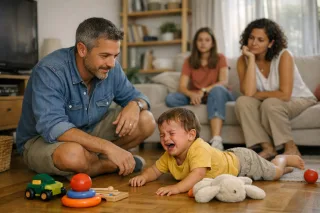
If you are living through this, start here: your child does not need a perfect adult. They need an adult who is present and calm enough to help them get through this moment, even if you are struggling too.
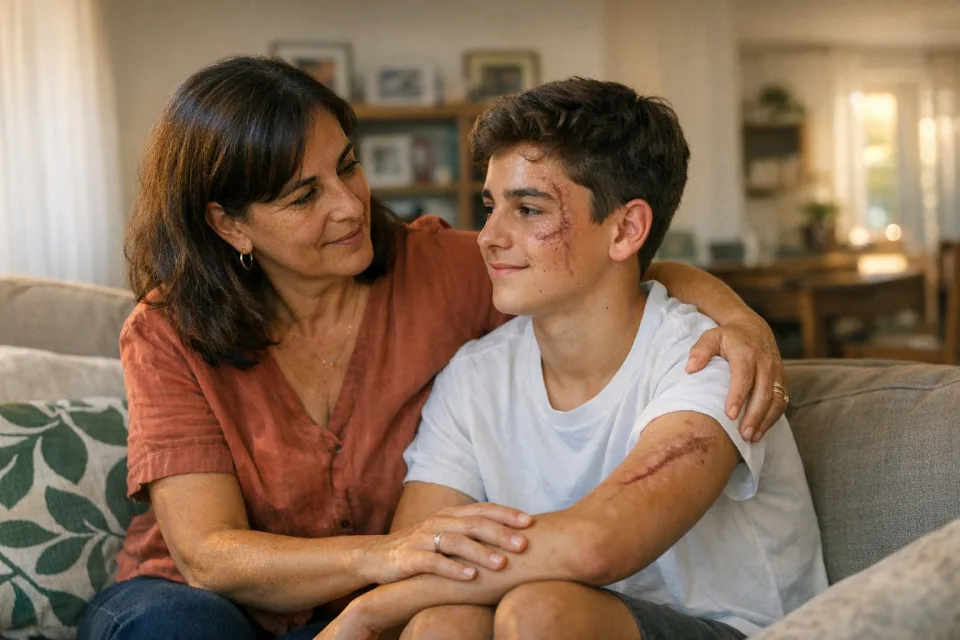
The marks left by an accident can be physical, such as scars, reduced movement, or changes in appearance. But they can also be emotional: shame, fear of going out again, anxiety, irritability, nightmares, or a loss of confidence. The good news is that, with support, many children recover very well, both inside and out, and may even grow in resilience.
1. First: make sure your child is safe and medically followed up
If the accident was recent or recovery is still ongoing, the most important thing is to make sure your child is being followed by healthcare professionals. In Portugal, follow the guidance given at the hospital, health centre (centro de saúde), or specialist appointment. If there is ongoing pain, fever, signs of infection, difficulty moving the affected area, changes in vision, dizziness, vomiting, unusual sleepiness, or any other worrying symptom, seek medical assessment quickly.
Even when the immediate fear has passed, it helps to have a clear plan: medication, wound care, physiotherapy, appointments, and warning signs. This gives the family a greater sense of control.
At the same time, try not to turn care into anxious over-monitoring. The goal is to protect without making the injury the centre of family life.
2. Acknowledge what they feel, without minimizing it
Many children and teenagers notice quickly when adults avoid the subject. When a parent says “it’s nothing” or “you can barely see it,” they may mean to comfort, but the child may feel that their pain or sadness is not being taken seriously.
It is more helpful to say things like:
- “I know this scared you.”
- “I can see you’re sad or embarrassed.”
- “It makes sense that you’re angry about what happened.”
- “I’m here with you, and we’ll face this together.”
Validating does not mean making things more dramatic. It means showing that what they feel is real. That reduces shame and makes space for conversation.
3. Deal with your own inner pain first
When a child is marked for life, parents can go through a quiet kind of grief. There may be grief for the “before”: the body image they had of their child, the freedom they used to have, the innocence of daily routines, or the dreams that were interrupted.
It is important to recognize this grief rather than hide it. If you need to, talk to your partner, a trusted relative, a friend, or a psychologist. An overwhelmed adult tends to transmit tension rather than support.
Some useful questions to ask yourself:
- What hurts me most in this situation?
- Am I feeling guilty for something I really controlled, or for something that was outside my control?
- Am I comparing my child with an ideal version I need to let go of?
- What do I need in order to be more emotionally available?
Being honest with yourself does not make you weaker. It makes you more available to your child.
4. If guilt is present, handle it gently
Some parents feel crushing guilt: for not preventing the accident, for letting the child go out, for not seeing a risk, or for taking too long to react. In some cases, there is real responsibility to be determined. In others, there is simply the weight of an unexpected event.
If guilt is blocking your ability to care, try to separate real responsibility from emotional suffering. Ask yourself:
- Were there clear warning signs that I ignored?
- Did I do the best I could with the information I had?
- Does continuing to blame myself help my child now?
If you need to deal with legal issues, insurance, or formal responsibility, seek appropriate advice. But avoid letting your child feel that they are also carrying the weight of your guilt.
5. Help your child rebuild their self-image
When a mark is visible, a child may feel they are no longer “the same.” They may avoid mirrors, photos, the beach, sport, parties, or situations where they feel people are staring. In teenagers, this can strongly affect self-esteem and identity.
Help them understand that they are more than the scar, the wheelchair, the physical limitation, or the change in appearance. The accident happened to them, but it does not define who they are.
You can reinforce this with simple phrases:
- “You’re still you.”
- “This is part of your story, but it isn’t your whole story.”
- “Your value has not changed.”
- “Your body has changed, but you are still whole.”
If your child is young, use concrete and calm language. If they are a teenager, give them space to say whether they want to talk about the mark, hide it for a while, or try to accept it little by little.
6. Don’t force positivity, but help rebuild hope
After an accident, some parents try to cheer their child up too quickly: “It’ll pass,” “don’t think about it,” “you have to be strong.” Even if the intention is good, this can leave the child alone with difficult feelings.
Instead of demanding enthusiasm, try to build realistic hope. The message can be: “There will be bad days, but there will also be progress. We don’t need to fix everything today.”
To do that, set small, concrete goals:
- get through a dressing change without crying
- walk a little further than yesterday
- return to one short activity
- agree to see a friend
- do one task a day that helps them feel capable
Small progress helps restore a child’s sense of control.
7. Make room for sadness, without letting life stop
Some children become quieter, others more irritable, and others seem fine during the day but fall apart at night. All of these reactions can be normal. The key is not to block emotional expression, but also not to let the accident take over everything.
You can set aside moments to talk and moments to do normal things. Simple routines help a lot: meals, sleep, school, play, time outdoors, contact with friends, light chores. Normal life, when possible, is healing.
If your child says they do not want to talk, respect that. You can answer: “That’s okay. I’m here whenever you want.” Often the conversation comes later, in unexpected moments.
8. Protect your child from hurtful looks and comments, without isolating them
Visible marks can attract questions, stares, or comments. That can be painful, especially at school and in adolescence. It helps to prepare short answers, without making your child explain everything.
Examples:
- “I had an accident.”
- “I’d rather not talk about it.”
- “I’m recovering.”
If there is bullying, teasing, or exclusion, speak to the school. In Portugal, schools are expected to be partners in emotional protection and in creating a safe environment. If needed, ask for support from the class teacher (diretor de turma), the school psychologist, or the school management.
At the same time, avoid pulling your child out of every social setting out of fear of other people’s reactions. The goal is to protect them without trapping them.
9. Watch for signs of deeper emotional distress
Some sadness, fear, or embarrassment can be expected. But there are warning signs that deserve professional attention:
- intense or prolonged sadness
- avoiding leaving the house for long periods
- frequent nightmares
- anxiety or panic attacks
- extreme irritability
- social withdrawal
- ongoing refusal to care about appearance or hygiene
- loss of interest in activities they used to enjoy
- statements of hopelessness or self-devaluation
In these cases, it is worth seeking help from a child or adolescent psychologist. In trauma situations, early intervention can make a big difference.
10. Use spirituality and values, if that fits your family
For many families, faith, prayer, a religious community, or a spiritual view of life can be an important source of support. If that is part of your home, it may be comforting to pray together, light a candle, give thanks for small steps of progress, or ask for calm to get through this period.
Even without religious language, you can pass on values such as courage, compassion, patience, perseverance, and dignity. When a child sees that the family does not reduce them to their wound, but continues to treat them with respect and tenderness, they feel more whole.
11. Take care of your relationship with yourself and with your child
An accident can change family dynamics. There are more appointments, less time, more tiredness, and less patience. Try to keep moments of simple connection: reading a story, watching a film, taking a walk together, cooking something easy, talking without discussing health all the time.
Small acts of normal life tell your child: “Your life still has pleasure, belonging, and a future.”
If you feel like you are constantly in survival mode, ask for practical help. A relative can take the child to an appointment, prepare a meal, or look after siblings. Logistical support is also emotional support.
12. What usually helps most
- Speaking honestly, without dramatizing or minimizing
- Validating emotions
- Keeping routines where possible
- Celebrating small progress
- Avoiding comparisons with other children
- Protecting self-esteem
- Seeking psychological help when needed
- Allowing time for adjustment
13. What to avoid
- “Don’t cry”
- “It was nothing”
- “You have to forget about it”
- “If you’re strong, it will go away faster”
- Talking about the mark as if it were shameful
- Making the accident the centre of every conversation
- Promising that everything will be exactly the same
The goal is not to deny how hard this is. It is to help your child integrate the experience without losing their sense of self.
Conclusion
An accident that leaves marks for life is a hard experience for any family. There is pain, fear, grief, and often a long path of adjustment. But a mark does not have to destroy your child’s confidence, joy, or future.
With your presence, the right words, medical and emotional support, and space to recover at the pace that is possible, your child can find their strength again. They may not return exactly to how things were before. But they can keep growing, smiling, dreaming, and building a strong identity, even with scars.
Sometimes the greatest help a parent can offer is this: “I see your pain, I don’t have all the answers, but I won’t leave you alone in this.”