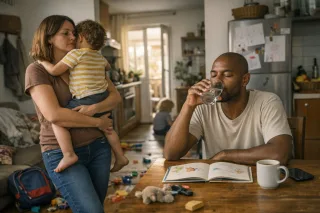

Feeling alone after becoming a mother: what this means
Some mothers live surrounded by people and still feel deeply alone. Motherhood can bring a difficult mix of emotions: love, exhaustion, pressure, doubt, guilt, and often a heavy inner silence. Feeling alone does not mean you are a bad mother. It often means you are tired, overwhelmed, or not getting enough support.
This loneliness can show up at any stage: during pregnancy, after birth, when the baby does not sleep, when a child starts school, during the teenage years, or at times of separation, grief, or moving house. For some women, the feeling passes. For others, it settles in and starts to affect mood, sleep, patience, and the way they see themselves.
Talking about this matters because maternal isolation is more common than people think. And when it is recognized early, it can be easier to build support and prevent exhaustion from turning into deeper distress.
Why so many mothers feel isolated
The reasons can vary, but there are some very common patterns. Many mothers feel like they are always responding to everything: work, home, school, meals, appointments, schedules, tantrums, chores, and everyone’s emotions. When days are spent on autopilot, there is little room left to talk, rest, or simply be with someone without having to solve problems.
Isolation can also happen when:
- there is no support network nearby;
- family lives far away;
- a partner is not very available;
- there is family conflict or separation;
- a mother is on parental leave, working from home, or at home with very young children and has little adult contact;
- there is shame in admitting that things are hard;
- there are unrealistic expectations about motherhood and the idea that “everyone else is managing.”
On social media, comparison often makes loneliness worse. We see images of happy families, tidy homes, and mothers who always seem calm. Real life is usually much more tired, messy, and imperfect than what appears on screen.
Signs that loneliness is becoming too heavy
It is normal to want time alone sometimes. The problem is when isolation stops being just a moment and becomes a way of living. Some signs worth paying attention to include:
- frequent sadness or a feeling of emptiness;
- constant irritability, especially with children or a partner;
- feeling like crying for no clear reason;
- losing interest in things that used to bring joy;
- extreme tiredness that does not improve with rest;
- difficulty sleeping, even when there is a chance to;
- feeling that no one understands you;
- thoughts like “I’m not good at this” or “I’m alone in this”;
- the urge to withdraw from everyone;
- difficulty caring for yourself, eating, or doing basic tasks.
If these signs persist, it is important not to stay silent. Ongoing isolation may be linked to anxiety, postpartum depression, depression, parental burnout, or a period of heavy emotional overload.
First step: name what you are feeling
Many mothers try to hold everything together without saying out loud what they are going through. But naming the experience helps organize what you feel. Instead of only thinking “I’m not okay,” try being more specific:
- “I’m exhausted and not getting enough rest.”
- “I feel invisible.”
- “I need company and practical help.”
- “I’m carrying too much on my own.”
Naming what you feel does not fix everything, but it reduces inner confusion. It also makes it easier to tell someone what you need instead of hoping they will guess.
How to build a support network, step by step
Not every support network starts with big gestures. Often, it begins with small, steady connections. Your network can include a partner, family members, neighbors, friends, other mothers, colleagues, teachers, health professionals, or community groups.
Here are some practical ways to begin:
1. Identify who feels safe
Think of two or three people you feel at least somewhat comfortable with. They do not need to be perfect. They only need to be able to listen without judging.
2. Ask for small, specific things
Instead of only saying “I need help,” try specific requests: “Can you stay with the baby for 30 minutes so I can sleep?”, “Can you pick up my child from school this week?”, “Can you bring soup or do a small grocery shop?”
3. Accept help without over-explaining
Many mothers feel guilty about receiving support. But accepting help is not weakness. It is a healthy way to protect your family and your own health.
4. Create regular points of contact
A message once a week, a fifteen-minute coffee, an evening call, or a walk with another mother can make a difference. The key is that the contact must be realistic in everyday life, not only “when there is time,” because that time often never appears.
5. Look for places where you can belong
Postpartum groups, school activities, local associations, gyms, parishes, community centers, or neighborhood spaces can help break the feeling of living in a bubble. The goal is not to make many friends quickly, but to feel that you belong somewhere.
The role of a partner, family, and friends
People close to you may want to help, but they do not always understand what is happening. Sometimes a mother seems to be “functioning” and everything looks fine from the outside. That is why communication needs to be clearer.
If you have a partner, it helps to talk about tasks, schedules, and rest in a specific way. It is not enough to simply “help more.” It is better to agree on responsibilities: nights, meals, children’s baths, shopping, appointments, tidying up, or time for you to go out alone.
With family and friends, it can be useful to explain what helps and what does not. Some well-meaning people give too much advice, minimize the situation, or ask, “But why are you like this?” If that happens, you can answer simply: “Right now, I need support more than explanations.”
When loneliness is linked to the postpartum period
In the postpartum period, isolation can be even more intense. The body is recovering, sleep is broken up, the baby needs constant attention, and the old routine disappears overnight. Many mothers stay at home with few visitors and feel like adult life has been put on hold.
Also, motherhood is not always experienced with the glow people expect. There may be pain, breastfeeding difficulties, mixed feelings, fear of not doing things right, and huge pressure to look happy. All of this can increase isolation.
If sadness is persistent, if there is a feeling of hopelessness, intense anxiety, or difficulty bonding with the baby, it is important to seek professional help. This does not mean failing. It means caring for yourself and for the bond with your baby.
What to do day to day so you do not shut down even more
When your energy is at the limit, changes need to be small and realistic. Some simple ideas:
- get some fresh air every day, even for ten minutes;
- talk to one adult a day;
- avoid spending hours comparing yourself on social media;
- eat one meal seated, without your phone, when possible;
- keep a basic routine for sleep, showering, and eating;
- ask for a break before reaching breaking point;
- choose one activity that reminds you that you are also a person, not only a mother.
You do not need a perfect life to start feeling relief. Often, small islands of rest and connection already help restore some stability.
How to ask for help without guilt
One of the hardest parts is admitting: “I need help.” Guilt often appears quickly, especially for mothers who were taught to endure, serve, and put everyone first. But asking for help is an act of responsibility, not selfishness.
You can start like this:
- “I’m not managing to rest.”
- “I’m feeling very alone and needed to talk.”
- “I’ve been feeling really low.”
- “I need practical support this week.”
If speaking face to face is difficult, send a message. The important thing is to break the silence. Often, the people around you want to help, but they need to know how.
When to seek professional help
You should seek professional help if loneliness comes with deep sadness, strong anxiety, panic attacks, extreme irritability, a feeling that you are losing control, very intense guilt, or difficulty caring for yourself and your children.
In Portugal, you can start with your centro de saúde, family doctor, maternal health services, child health services, or psychological support. If there is immediate risk to you or your children, seek urgent help. In emergencies, call 112.
If you are in emotional distress and need first-line support, do not wait for it to “pass on its own.” The sooner you ask for help, the easier recovery often becomes.
A more human view of motherhood
Motherhood should not be lived as a silent endurance test. No mother needs to be strong all the time. Needing comfort, rest, company, and someone who listens is human. And it is healthy too.
If you feel alone, what you may need is not to “endure a little longer,” but to rebuild support, lower the pressure, and allow yourself to be cared for. A network does not have to be large to matter. Sometimes, one real person makes all the difference.
Taking this step may feel small. But it is a beginning. And often, that is exactly the beginning that was missing.
Conclusion
Feeling alone in motherhood is more common than many people realize, but it should not be normalized to the point of becoming invisible. Isolation can ease when it is recognized, when you talk about it without shame, and when you ask for practical help. If you are living this, you do not need to solve everything today. Start with one gesture: talk to someone, rest a little, reduce the pressure, and seek support if the burden is growing.