
What is puberty in boys?
Puberty is the stage when a boy’s body starts changing so it becomes physically capable of reproduction. But it is not just the body that changes. There are also changes in emotions, thinking, self-esteem, and relationships with others.
In general, puberty starts between ages 9 and 14, although it can begin earlier or later. Every boy develops at his own pace, and that is normal. The most important thing is to understand that puberty does not happen overnight: it is a gradual process.
For many parents, this stage raises questions. When do the signs start? What is normal? How can you talk about the body, sexuality, hygiene, and emotions without embarrassment? This guide helps answer those questions in a practical way.
What are the first signs of puberty?
The first signs are usually subtle. Often, parents notice small physical changes first, such as the testicles and penis getting bigger, before other more visible changes appear.
The most common signs include:
- Growth of the testicles and penis
- Hair growth in the pubic area, armpits, legs, and face
- Changes in body odor, with more sweat and underarm smell
- Voice changes, gradually becoming deeper
- Rapid growth, especially in height
- Acne or oilier skin
- Greater need for privacy and more modesty about the body
Some boys also begin having spontaneous erections or night-time emissions, often called “wet dreams.” This is normal and part of sexual development.
What physical changes happen?
Puberty in boys involves several hormonal changes. Testosterone levels rise and trigger changes in the body. Among the most common changes are:
Rapid growth
Many boys grow a lot in a short time. This growth spurt can cause some discomfort, leg aches, or temporary clumsiness. It is not unusual for them to seem awkward during this phase.
Voice changes
The voice may crack for a while before becoming deeper. This process is natural and usually happens gradually.
Body hair
Pubic hair is usually one of the first signs. Later, hair may appear in the armpits, legs, chest, and face. The amount varies a lot from boy to boy.
More sweat and body odor
Sweat glands become more active. That is why regular hygiene becomes even more important, including bathing, clean clothes, and deodorant if needed.
Changes in the genitals
The testicles and penis grow, and the boy begins producing sperm. This marks the start of fertility, although development may still take some time to be complete.
Acne and oily skin
Hormonal changes can cause pimples on the face, back, and chest. A simple skin-care routine usually helps, but more severe cases may need medical support.
What about emotional changes?
Puberty does not affect only the body. A boy may feel more sensitive, irritable, embarrassed, or confused. This happens because the brain is also developing and because there can be social pressure to “seem grown up.”
Some common emotional changes are:
- Mood swings
- A stronger need for independence
- Embarrassment about the body
- Comparing himself with peers
- Insecurity about being “normal”
- Growing interest in relationships, attraction, and sexuality
It is important not to dismiss these feelings. Phrases like “that’s hormones” may be said lovingly, but they should not replace a real conversation. A boy needs to feel that he can talk without being mocked or corrected all the time.
How can you talk about puberty without embarrassment?
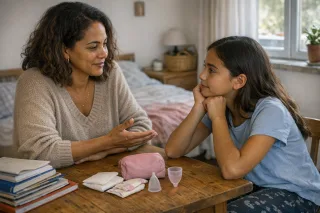
Talking about puberty can feel uncomfortable for many parents, but being natural helps a lot. You do not need one perfect big conversation. Often, small everyday moments are enough.
Some useful tips:
- Start early, before the signs appear
- Use clear language and correct names for body parts
- Answer at his level, without giving more information than he needs right then
- Listen without laughing or shaming
- Show that it is a normal stage and that every body develops at its own pace
- Be available to return to the topic more than once
If your son asks, “Is this normal?”, the most helpful answer is usually simple and honest: “Yes, many puberty changes are normal. If there is anything I’m worried about, we’ll look at it together.”
What do boys need to know about hygiene?
With more sweat, hair, and hormonal activity, hygiene needs a bit more attention. It should not be presented as criticism, but as part of caring for the body.
Important points to discuss:
- Bathing regularly
- Washing the armpits, private area, and feet well
- Changing underwear every day
- Wearing clean clothes after sport
- Learning how to care for skin if acne appears
- Using deodorant if needed, in a way that is age-appropriate
It is also useful to explain that the genital area should be cleaned gently with water, without overdoing it and without harsh products.
How do you handle embarrassment and privacy?
Many boys begin asking for more privacy, closing their bedroom or bathroom door, and becoming more sensitive to comments about their body. This is a healthy part of growing up.
Parents can help by:
- Respecting his space whenever possible
- Knocking before entering
- Avoiding jokes about the body, body hair, or voice changes
- Not comparing him with siblings, cousins, or classmates
- Reinforcing that growing up is normal and nothing to be ashamed of
At the same time, privacy does not mean complete distance. A teenager still needs presence, boundaries, and genuine interest from parents.
When should you talk about sexuality?
Ideally, conversations about sexuality should start early and gradually, adapted to age. During puberty, it is important to explain that the body changes, erections and ejaculation happen, and that this is part of development.
It is also worth talking about:
- Consent and respect for others
- The difference between curiosity, intimacy, and peer pressure
- Responsible internet use and exposure to sexual content
- Healthy relationships and mutual respect
If the topic feels too difficult, you can start with simple questions: “Have you heard about this at school?” or “Is there anything that confuses you?”
The role of school, friends, and social media
Puberty is also influenced by the social environment. Friends can be a source of support, but also of comparison and pressure. Social media and online videos can create unrealistic expectations about bodies, strength, masculinity, and sexuality.
It is worth talking about:
- Not everyone grows at the same time
- Different bodies are normal
- What you see online is not always real
- It is important to ask for help if there is bullying or constant embarrassment
If the boy is becoming very withdrawn, sad, or being teased at school because of his voice, body, or development, it is worth stepping in sooner.
When should you be concerned?
Although there is a wide range of normal development, there are situations where it is a good idea to speak with the pediatrician or family doctor. For example:
- Signs of puberty before age 9
- No signs of puberty after age 14
- Very rapid or very slow growth
- Persistent pain or changes in genital development
- Very severe acne
- Marked sadness, anxiety, or isolation
- Risky behavior or substance use
If in doubt, it is better to ask for an assessment than to wait in silence. Often, a medical check is enough to reassure the family.
How can you support a son during this stage?
Parental support makes a difference. More than controlling every detail, what matters is creating emotional security. A boy who feels accepted has an easier time growing with confidence.
Some helpful approaches:
- Listen carefully
- Give simple, truthful information
- Keep clear and consistent boundaries
- Respect privacy
- Support self-esteem without going over the top
- Be available for difficult conversations
It is also important to remember that puberty education is not only about the body. It is about teaching respect, responsibility, self-care, and the ability to ask for help.
Conclusion
Puberty in boys is an intense but natural stage. Signs may begin subtly and bring physical, emotional, and social changes. When parents speak clearly, listen without judgment, and respect their son’s pace, this transition becomes calmer.
You do not need to know everything. What matters most is keeping the door open. A boy who feels he can ask questions, make mistakes, and talk at home grows with more security and confidence.
If you have questions about your child’s development, speak with the pediatrician or family doctor. In health matters, it is always better to clarify things early than to wait too long.
FAQ
At what age does puberty start in boys?
It usually starts between ages 9 and 14, but normal variation is common. Every boy’s pace can be different.
What is the most common first sign?
Often the first sign is the growth of the testicles and penis, followed by pubic hair and changes in body odor.
Is it normal for my son to become more irritable or embarrassed?
Yes. Hormonal changes and social pressure can lead to mood swings, embarrassment, and a greater need for privacy.
Should I talk about ejaculation and erections?
Yes, naturally and in an age-appropriate way. These are normal puberty changes, and it is important that he understands them without fear.
When should I seek medical help?
If puberty starts very early, very late, or if there are changes that worry you, the best approach is to speak with the pediatrician or family doctor.