When a baby is born, the older child may feel they are losing their place
The arrival of a baby sibling usually brings joy, but it can also affect the older child deeply. Even children who seemed excited about the news may react with tantrums, regression, irritability, aggression, crying, or constant demands for attention. This does not mean they love the baby less or are being difficult on purpose. Most of the time, they are trying to cope with a change that feels far too big for them.
For a child, seeing parents split their time, cuddles, and attention with someone else can feel like a loss. The most important thing is to help the older child feel that they still have a place, value, and sense of safety in the family.
Why does jealousy happen?
Sibling jealousy is normal. With a newborn, the older child may feel:
- afraid of being forgotten
- angry about having to wait longer for their parents
- confused by changes in routine
- sad about no longer being “the baby of the house”
- insecure when they see mum or dad so busy
If the child is still very young, they may not be able to explain what they feel. In that case, behaviour speaks for them.
How to prepare the older child before the birth
Preparation starts before the baby arrives. The more predictable the change feels, the easier it will be for the child to adapt.
1. Talk about the baby in a simple, realistic way
Explain that the baby will need lots of cuddles, milk, nappies, and help, but avoid creating the idea that life will be endlessly “wonderful” just because they have a sibling. If possible, also say what will change and what will stay the same: school, sleep times, playtime, or certain family routines.
2. Validate mixed feelings
The older child may feel happy and, at the same time, scared or angry. Let them know it is normal to feel different things at once. Phrases like “you can love the baby and feel jealous too” help the child understand they do not need to hide their feelings.
3. Involve the child without turning them into a caregiver
It helps to give them small age-appropriate tasks, such as choosing an outfit for the baby, bringing a nappy, or singing a song. But it is important not to give them too much responsibility. The older child should not feel they now have to help all the time or grow up too quickly.
4. Prepare for routine changes
If schedules, rooms, schools, carers, or other habits are going to change because of the baby, try to warn the child in advance and explain why. Children handle change better when they know what comes next.
5. Read books and play pretend
Stories about siblings, babies, and families help children make sense of emotions they do not yet know how to name. Pretend play can also be a safe way to show fear, jealousy, and curiosity.
What to do in the first days at home
The first days are often intense. There are visitors, exhaustion, a crying baby, and less time for everything. That is exactly when the older child most needs predictability and intentional attention.
Keep small moments just for them
It does not need to be a long time. Ten minutes of one-to-one attention, without phones or interruptions, can make a big difference. You might read a story, play, draw, or talk about the day.
Acknowledge them whenever they come near the baby
When the child approaches the newborn, notice the gesture: “It’s lovely to see you here with us” or “Thank you for speaking softly near the baby.” Instead of always moving them away, show them how to be involved safely.
Avoid comparisons
Phrases like “you’re big now” or “the baby doesn’t do that” may seem harmless, but they can increase the sense of loss. The older child is still little in many ways, even if they are no longer a baby.
Protect the older child’s rest time
If they still nap or need stable sleep routines, try to preserve them. Tiredness makes irritability worse and can intensify jealousy.
How to respond to jealousy without making things worse
The goal is not to eliminate jealousy right away, but to help the child express it without hurting the baby or themselves.
Name the feeling
Instead of saying “you have no reason to feel that way,” try: “It seems like you’re sad because I’m with the baby” or “you’re angry because you wanted cuddles.” When the emotion is named, the child feels understood.
Set clear limits on aggressive behaviour
It is possible to accept the feeling and stop the action. For example: “You can be angry, but you cannot hit the baby.” Repeating this limit calmly and consistently is essential.
Do not punish jealousy as if it were bad intent
If the child regresses, asks for extra cuddles, or returns to old behaviours, try to see it as a request for help, not manipulation.
Give them space to release emotion
Playing, running, jumping, drawing, or squeezing cushions can help. Some children also benefit from calm evening routines with a bath, a story, and gentle physical closeness.
How to encourage the sibling bond
The relationship does not need to be perfect from the start. The bond grows over time through repeated positive experiences.
Create short, safe interactions
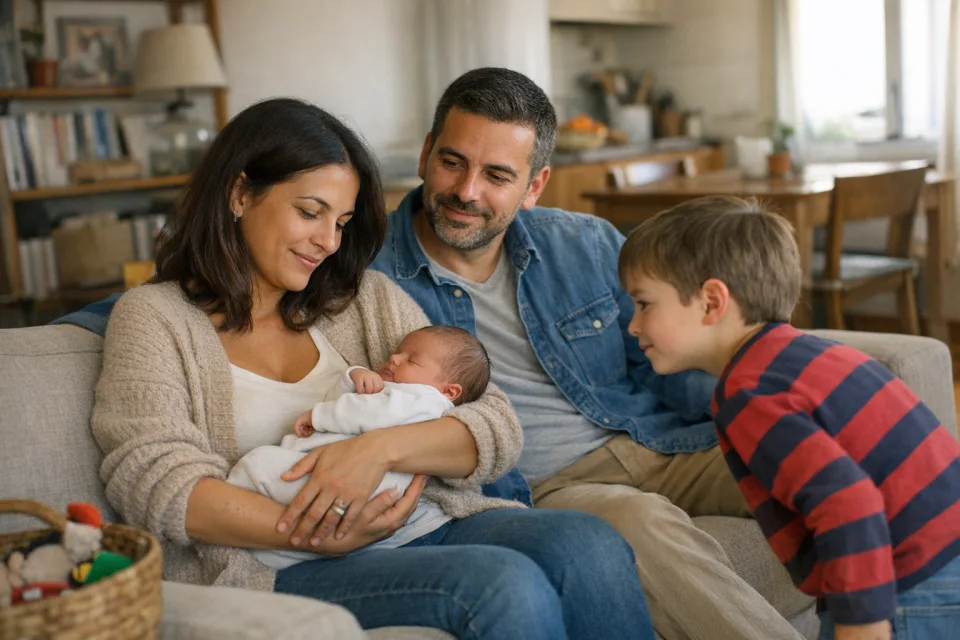
The older child can help rock the baby, choose music, show toys, or talk to them. These interactions should always be supervised, especially while the baby is still very small.
Value what the older child brings to the family
Let them know they have not lost their place. They now have a different role, but they are still unique. You might say: “You are our oldest child, and that is very special” or “the baby will learn a lot from you.”
Do not force instant affection
Some children need more time before they feel close to their baby sibling. Respect the child’s pace and do not force kisses, hugs, or sharing if they are not ready.
What if the behaviour gets worse?
Some regression is common: asking for a bottle again, wanting to sleep with the parents, talking like a baby, having more tantrums, or showing strong jealousy. This usually improves with safety, routine, and consistent attention.
Seek professional help if the child shows persistent aggression, very intense anxiety, prolonged sleep problems, marked sadness, isolation, refusal to go to school, or behaviour that seems very unusual for several weeks.
Common mistakes that can make jealousy worse
- expecting the older child to “just get used to it” without support
- telling them they are “the big one now” in a way that pushes aside their emotional needs
- comparing siblings
- giving them too much responsibility
- withdrawing attention just because the baby needs more
- making them feel guilty for being jealous
The older child does not need perfection. They need to feel that their parents’ love has not been divided: it has grown to make space for everyone, even if time is tighter.
The parents’ role when they are tired too
It is normal for a new baby to bring sleep deprivation, mental load, and less patience. When adults are exhausted, everything feels harder. At this stage, it helps to simplify expectations and ask for help from the people around you, if you can. A grandparent, aunt, friend, or trusted neighbour may help make sure there is some one-to-one time with the older child.
If you are parenting as a couple, try to share care as much as possible so each adult has time with each child. If the family is separated, or if custody is shared, consistency between homes, whenever possible, also helps the child feel safe.
In short
Jealousy towards a baby sibling is a normal response to a big change. The older child needs preparation, emotional validation, clear limits, and regular moments of individual attention. With support, jealousy tends to ease, and the sibling relationship can become an important source of company, learning, and affection.