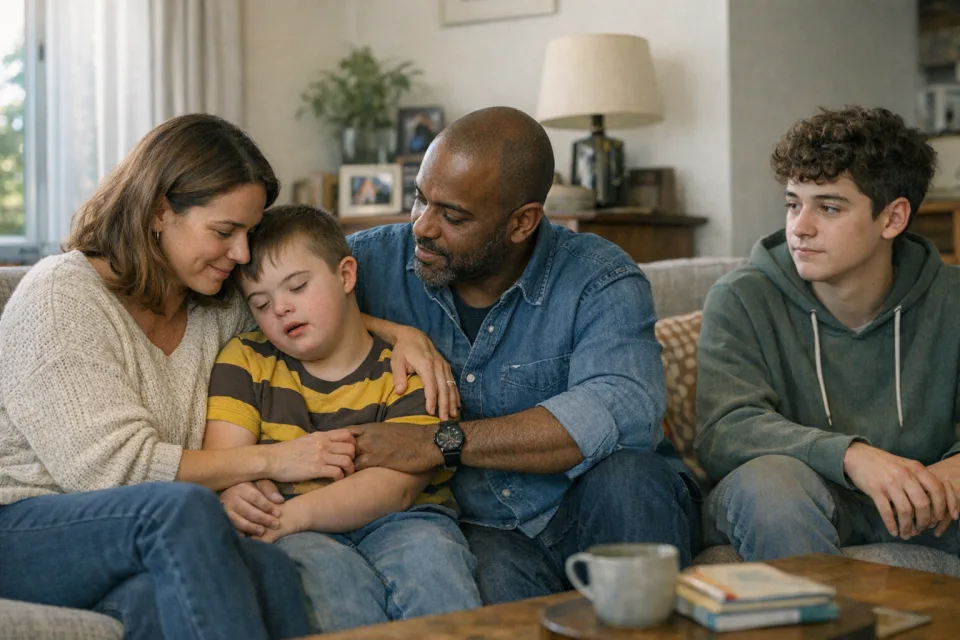
When there is a child with special needs, the whole family changes
When one child has special needs, it is natural for parents’ attention to shift toward appointments, therapies, medical routines, school, and the demands of everyday life. That does not mean the siblings matter less. It simply means the family is living at a more demanding pace, and everyone feels that pressure in different ways.
Siblings may love the child with special needs very much and still feel jealousy, sadness, embarrassment, anxiety, anger, or guilt for not handling the situation better. These feelings do not make a child bad or selfish. They make them human.
The challenge for parents is not to prevent every difficult emotion. It is to create space for those emotions to exist without taking over family life.
What siblings may be feeling
Not every child reacts in the same way. Some become very mature and helpful. Others become more irritable, quiet, or demanding. Still others move between pride in their sibling and frustration about not getting the same attention.
Common feelings include:
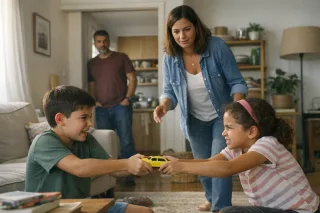
- Jealousy, when they see the sibling receiving more time, help, or patience.
- Guilt, for wishing things were different or for getting angry.
- Too much responsibility, when they feel they have to “be strong” or always help.
- Embarrassment or discomfort, especially if there are visible differences or behaviours that draw attention in public.
- Fear, if they do not understand the sibling’s condition well or hear adult conversations without enough explanation.
The opposite can also happen: a child may show a lot of empathy and protectiveness while hiding sadness. That is why observing behaviour is as important as listening to what they say.
How to recognise signs that a sibling needs more attention
Often, siblings do not ask for help directly. Instead, they show what they feel through their behaviour. Some common signs are:
- more tantrums, aggression, or arguments;
- a drop in school performance;
- physical complaints without a clear cause, such as stomach aches or headaches;
- regressions, such as bedwetting again;
- withdrawal, sadness, or apathy;
- constant demands for attention;
- attempts to get attention in negative ways;
- “mini adult” behaviour, being overly caring or worried.
These signs do not necessarily mean there is a serious problem. But they do show that the child may need a safe space to talk and to be seen as themselves, not only as “the sibling of”.
How to talk to siblings about the child’s condition
Giving clear information usually reduces fear and guilt. The explanation should be adapted to the child’s age, using simple and honest language. If a child feels there are secrets or vague explanations, they tend to imagine something worse than the reality.
Some useful ideas:
- explain the name of the condition, if that makes sense;
- say what the child can or cannot do;
- make clear that the condition is nobody’s fault;
- show that difficult emotions are allowed;
- answer questions calmly, even if they are repeated many times.
Phrases like “your brother needs more help with some things, but that doesn’t mean he loves you any less” or “it is normal to feel angry sometimes” can ease a lot of tension.
If the child is young, it can help to use simple, concrete comparisons. If they are older, they may benefit from more detailed explanations about the condition, the limits involved, and the support available.
How to balance attention between siblings without constant guilt
It is very common for parents to feel guilty because they cannot be equally present for everyone all the time. But balance does not mean treating all children the same, at every moment. It means responding to each child’s needs fairly and sensitively.
Some practical strategies help:
- one-on-one time: set aside small regular moments for each child, even if they are only 10 to 15 minutes;
- predictable rituals: reading before bed, going to the park, cooking together, or taking a walk with one sibling;
- undivided attention: when you are with one child, switch off distractions whenever possible;
- do not turn the healthy sibling into a caregiver: helping should not mean taking on adult responsibilities;
- share explanations and tasks between adults: if there are two caregivers, divide appointments, messages, and listening time;
- accept uneven phases: there are weeks when the child with special needs will need more. Other times, attention may return more to the siblings.
Family balance does not come from perfection. It comes from repeated attempts at real presence.
How to deal with parental guilt
Guilt appears easily. Parents think: “I’m not giving enough to my other children,” “my other child is suffering because of me,” or “I should be doing better.” While understandable, constant guilt is exhausting and rarely helpful.
It can help to replace the question “am I doing everything right?” with “what is possible today with the resources I have?” In many families, the goal is not perfect equality, but care that is good enough, repeated with love and consistency.
It also helps to recognise real limits. There are days when the priority will be a crisis, an appointment, or a sleepless night. On those days, the most important thing is to repair things later, with attention, conversation, and small moments of reconnection.
What to say when a sibling feels left out
When a child says, “You never have time for me” or “You only care about my brother,” it is worth resisting the immediate urge to defend yourself. Before correcting them, try to validate what they feel.
Examples of responses:
- “I can see why you feel that way.”
- “Today your brother needed a lot from us, but you are important too.”
- “I’m sorry I made you feel forgotten. Let’s think of a time that is just ours.”
- “It’s hard when the family is so busy. Thank you for telling me.”
Validating does not mean agreeing with everything the child says. It means showing that the emotion was heard.
How to avoid making the sibling feel invisible
Some children learn not to ask for anything so they will not add to their parents’ stress. They become calm, independent, and low-maintenance. At first glance, that may seem easy for adults. But behind that adjustment there may be loneliness.
To help prevent that:
- ask open and simple questions like “How has it been for you?”;
- notice changes in mood and routine;
- praise qualities without comparing them to the sibling;
- make space for their own preferences, friendships, and activities outside the home;
- show interest in what they like, not only in the family’s needs.
The child needs to feel that they exist as a whole person, not just as emotional support for the family system.
When it is helpful to seek outside help
Sometimes the family needs extra support. That may happen when siblings show ongoing distress, when there are intense conflicts at home, or when parents can no longer manage everything alone.
It may make sense to seek help from a child psychologist, child and adolescent psychiatrist, family therapist, or from the school’s support team. Early intervention can prevent distress from turning into bigger problems such as behaviour issues, anxiety, or isolation.
If a child says things like wanting to disappear, being very sad for weeks, refusing to go to school, or showing constant aggression, it is important to ask for professional assessment.
In Portugal, support can begin through the family doctor, the local health centre, the school, or local mental health services. In situations of immediate risk, urgent help should be contacted.
The role of school and the support network
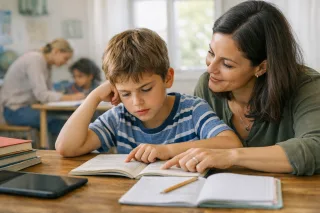
School can be an important ally. Teachers, early childhood educators, and support staff can help notice emotional changes, support the child, and prevent misunderstandings. When the family feels comfortable, it can share relevant information with the school, especially if the child seems more tired, distracted, or distressed.
It is also useful to have a support network: grandparents, aunts and uncles, godparents, close friends, trusted neighbours, or other families who understand the reality. Asking for help to take a child to activities, accompany a sibling to an appointment, or give parents some free time is not a sign of weakness.
What about spirituality, values, and the sense of family?
In many families, faith, spirituality, and shared values can bring comfort and a sense of unity. Praying together, giving thanks for small progress, and talking about compassion, patience, and mutual care can help siblings feel they belong to something larger. The important thing is that this is never used to silence pain. Healthy spirituality welcomes hard questions and does not force anyone to pretend everything is fine.
Values such as respect, solidarity, honesty, and fairness can also be built into everyday life: listening without interrupting, sharing time, recognising differences, and treating each child with dignity.
The balance that is possible is made of small repairs
There is no perfect formula for families raising a child with special needs. There will be days when one sibling feels forgotten, others when parents are at their limit, and others when everything seems to go more smoothly. The goal is not to eliminate guilt or frustration completely. It is to build a home where each child feels loved, seen, and respected.
Small repeated gestures make a difference: a conversation before bed, a hug without rushing, a one-to-one outing, an honest explanation, an apology when needed. It is this ongoing care that helps siblings grow with less burden and more emotional security.
If you are living this reality, remember: paying attention to siblings does not mean taking time away from the child with special needs. It means caring for the whole family, with humanity and without excessive guilt.
Conclusion
Siblings of children with special needs need love, listening, and their own space. When parents can recognise guilt, validate difficult emotions, and create moments of individual attention, the whole family gains more balance. It is not about being perfect. It is about staying present, one small repair at a time.