Topic
Childhood
Articles from filhos.pt about infancia for families.
 Guide
Guide
Choosing a nursery is an important and often emotional decision. This guide helps you prepare for a visit, ask the right questions, and calmly judge whether the space is safe, welcoming, and suitable for your child.
Read article
 Guide
Guide
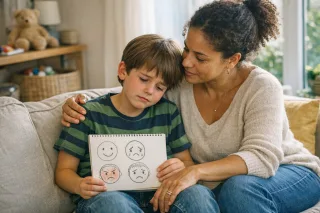
Helping a child recognize and name emotions is an important step for their well-being, self-esteem and family relationships. With small routines, clear examples and plenty of presence, parents and caregivers can support this development from an early age.
Read article
 Guide
Guide
Getting lost can happen in a shopping mall, on the beach, in a park or while travelling. Learn how to prepare your child with simple phrases, practical drills and safety rules that build confidence.
Read article
 Guide
Guide
Teaching responsibility is not about demanding perfection. It is about giving children small tasks, routines, and trust so they learn to care for themselves, others, and their commitments.
Read article
 Guide
Guide
Choosing a child psychologist can raise questions for any family. In this practical guide, we explain the warning signs, the right questions to ask, and what to expect from the process, to help you make an informed and calm decision.
Read article
 Guide
Guide
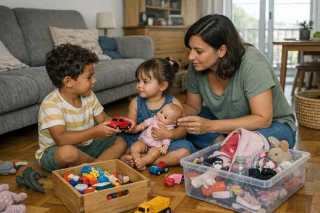
Sharing is a skill to learn, not an immediate obligation. See how to teach children to share toys calmly, with clear limits and practical examples, without forcing them to give in all the time.
Read article
 Guide
Guide
Tantrums at age 3 are part of development and can be exhausting for families. In this article, we explain why they happen, how to set limits without getting into a battle, and which practical strategies help calm your child and protect the relationship.
Read article
 Guide
Guide
Fever is common in children and often causes more worry than the illness itself. In this guide, we explain when you can monitor at home, how to ease discomfort, and which signs mean a child should be seen by a doctor.
Read article
 Guide
Guide
Some children feel everything more intensely: noise, changes, criticism, conflict, goodbyes. Sensitivity is not weakness. The challenge is to welcome emotions without keeping the child away from reality, frustration, and the experience of learning to live with discomfort.
Read article
 Guide
Guide
Not every child enjoys sports, and that doesn’t mean they lack health, discipline, or self-esteem. Here’s how to encourage them with respect, without turning physical activity into a battle at home.
Read article
 Guide
Guide
Tantrums at age 2 are common and part of child development. In this article, we explain why they happen and how to respond with limits, calm, and consistency, without losing connection with your child.
Read article
 Guide
Guide
Setting boundaries is neither being harsh nor permissive. It means teaching, calmly and consistently, what is safe, respectful and possible at home, at school and in daily routines.
Read article
 Guide
Guide
Choosing a sport for a child is not about deciding which one will win the most medals. It is about finding an activity that makes sense for the child’s body, personality, and family life. The goal is simple: more enjoyment, health, and a routine that can actually be maintained.
Read article
 Guide
Guide
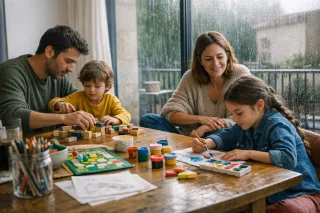
When the weather keeps you indoors, there are plenty of ideas to entertain children at home without relying on screens. We’ve gathered simple, low-cost activities for different ages to turn a rainy day into a fun family moment.
Read article
 Guide
Guide
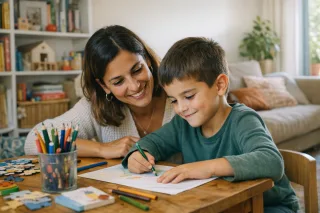
Children’s self-esteem is built through small everyday experiences: being listened to, trying, making mistakes, succeeding, and feeling loved all the same. See practical ways to build confidence without creating pressure.
Read article
 Guide
Guide
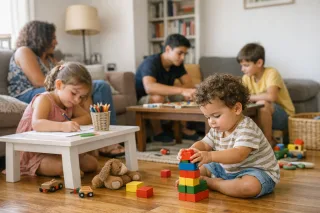
You do not need expensive toys or perfect activities to help a child grow. The best play is often the simplest, adapted to their age and to the family’s moment.
Read article
 Guide
Guide
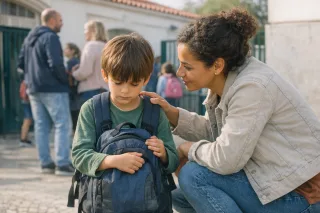
When a child does not want to go to school, they may be experiencing fear, anxiety, learning difficulties, social conflict, or another kind of distress. Learn how to understand the signs and what to do at home and with the school.
Read article
 Guide
Guide
When a child screams because they cannot have what they want, the hardest part is often not reacting in the same tone. This article offers practical ways to keep boundaries, calm the situation, and teach self-regulation without turning every conflict into a battle.
Read article