Topic
Psicologia infantil
Articles from filhos.pt about psicologia infantil for families.
 Guide
Guide
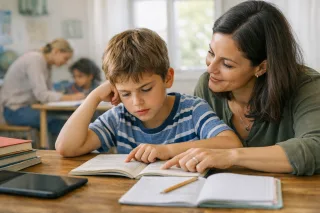
Dyslexia can make reading and writing more difficult, but with the right identification and consistent support, a child can learn with confidence. In this article, we explain the most common signs, how assessment works, and what parents and school can do to help.
Read article
 Guide
Guide
When a child feels ashamed of their body, it helps to listen without judgment, reinforce their worth beyond appearance, and talk about body image in a natural way. This article helps you understand what to say, what to avoid, and when to seek support.
Read article
 Guide
Guide
Not every sign shows up in the same way, and not every sign means autism. Still, knowing the early signs can help you ask for an assessment sooner and support your child better. See what to watch for, when to seek help, and how referrals work in Portugal.
Read article
 Guide
Guide
Helping a child recognize and name emotions is an important step for their well-being, self-esteem and family relationships. With small routines, clear examples and plenty of presence, parents and caregivers can support this development from an early age.
Read article
 Guide
Guide
Adjusting to shared custody can feel much easier when there is predictability, respectful communication and a clear focus on the child’s well-being. See practical strategies to make life in two homes simpler.
Read article
 Guide
Guide
Introducing a new partner to your children is a delicate moment. The right timing, how you talk about it, and the care you take will depend on the child’s age, the relationship, and the family context.
Read article
 Guide
Guide
Choosing a child psychologist can raise questions for any family. In this practical guide, we explain the warning signs, the right questions to ask, and what to expect from the process, to help you make an informed and calm decision.
Read article
 Guide
Guide
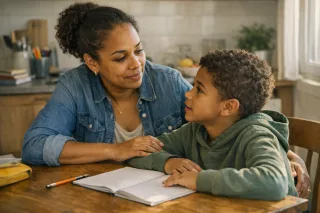
When a child says “I’m stupid”, they are often asking for help, not making a diagnosis about themselves. See how to respond calmly, without drama, and strengthen their confidence.
Read article
 Guide
Guide
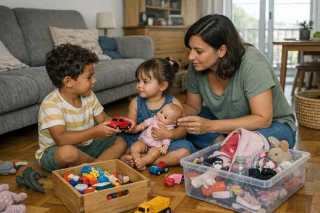
Sharing is a skill to learn, not an immediate obligation. See how to teach children to share toys calmly, with clear limits and practical examples, without forcing them to give in all the time.
Read article
 Guide
Guide
Tantrums at age 3 are part of development and can be exhausting for families. In this article, we explain why they happen, how to set limits without getting into a battle, and which practical strategies help calm your child and protect the relationship.
Read article
 Guide
Guide
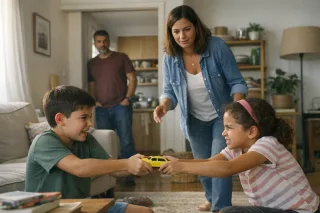
Sibling fights are common, but not every disagreement needs a parent to step in. Learn when to watch, when to mediate, and when to act firmly to protect everyone.
Read article
 Guide
Guide
Empathy is not taught with lectures. It is learned day by day, through the words we use, the way we correct, and how we respond to our children’s feelings. Discover how to help a child see others with more respect, sensitivity, and responsibility.
Read article
 Guide
Guide
A meeting with the school can change the direction of a difficult situation. With the right questions, clear information, and a willingness to work together, it is possible to reach concrete solutions for a child’s well-being and learning.
Read article
 Guide
Guide
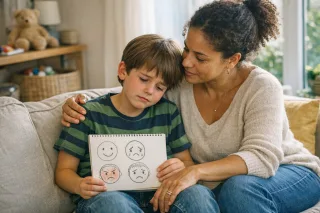
Some children feel everything more intensely: noise, changes, criticism, conflict, goodbyes. Sensitivity is not weakness. The challenge is to welcome emotions without keeping the child away from reality, frustration, and the experience of learning to live with discomfort.
Read article
 Guide
Guide
Natural and logical consequences help parents guide children with firmness and respect, without threats. In this article, we explain the difference between them, when they work, when to avoid them, and how to use them at home and at school with simple examples.
Read article
 Guide
Guide
Not every child enjoys sports, and that doesn’t mean they lack health, discipline, or self-esteem. Here’s how to encourage them with respect, without turning physical activity into a battle at home.
Read article
 Guide
Guide
Talking about death with a child is hard, but avoiding the topic can increase confusion and fear. This guide helps you respond with honesty, simplicity, and care, adapting the conversation to your child’s age and to what your family is going through.
Read article
 Guide
Guide
A new baby changes family life and can trigger jealousy in the older child. Learn how to prepare them before birth, support them after arrival, and make space for each child to feel safe, loved, and included.
Read article
 Guide
Guide
Tantrums at age 2 are common and part of child development. In this article, we explain why they happen and how to respond with limits, calm, and consistency, without losing connection with your child.
Read article
 Guide
Guide
Starting 1st grade is a big change for both child and family. Here are practical ways to make the transition easier before and after school starts.
Read article
 Guide
Guide
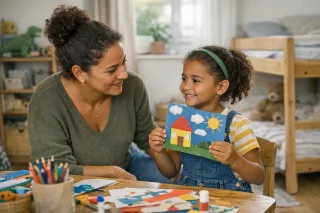
Praise helps children grow, but the way we do it makes a difference. Find out how to value effort, encourage autonomy and avoid making a child depend on adults’ approval.
Read article
 Guide
Guide
Setting boundaries is neither being harsh nor permissive. It means teaching, calmly and consistently, what is safe, respectful and possible at home, at school and in daily routines.
Read article
 Guide
Guide
A walk outdoors may seem like a small thing, but it can have real effects on mood, sleep, attention and the connection between parents and children. Learn how to make the most of these family moments.
Read article
 Guide
Guide
An accident can leave scars on the body and also on confidence, mood, and the way a child sees themselves. This article helps you understand what to do, what to say, and how to support recovery with more calm, hope, and realism.
Read article
 Guide
Guide
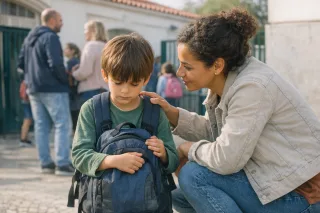
When a child does not want to go to school, they may be experiencing fear, anxiety, learning difficulties, social conflict, or another kind of distress. Learn how to understand the signs and what to do at home and with the school.
Read article
 Guide
Guide
When a child screams because they cannot have what they want, the hardest part is often not reacting in the same tone. This article offers practical ways to keep boundaries, calm the situation, and teach self-regulation without turning every conflict into a battle.
Read article